

Innovation Awards
A total of forty organizations submitted entries to the inaugural  annual Brain Fitness Innovation Awards, designed to foster innovation and best practice sharing by celebrating outstanding pioneers who apply neuroplasticity-based research and tools in the œreal world. The awards recognize organizations that are devising and implementing results-oriented and scalable initiatives that demonstrate their commitment to the brain fitness of their clients, members, patients, students or employees, and showcase innovative uses of non-invasive tools to improve cognitive and emotional functions and real-world outcomes.
The 2011 edition will start on February 1st, 2011. The 2010 Winners were announced on May 24th, 2010.
- To meet the 3 Winners, click Here
- To meet the other Top 10 Finalists, click Here
- To meet the distinguished Judging Panel, click Here
- To access the press kit, click Here
Brain Fitness Innovation Awards
Prizes
1 Grand Prize Winner will receive: $2,500 check, consulting session with SharpBrains staff, 2 tickets for each SharpBrains Summit in 2011; 10 signed copies of The SharpBrains Guide to Brain Fitness
2 Silver Prize Winners will each receive: $1,000 check, consulting session with SharpBrains staff, 2 tickets for each SharpBrains Summit in 2011, 10 signed copies of The SharpBrains Guide to Brain Fitness
7 Finalists will each receive: $250 check, 1 ticket for each SharpBrains Summit in 2011, 10 signed copies of The SharpBrains Guide to Brain Fitness
Frequently Asked Questions
When will the process for the 2011 Brain Fitness Innovation Awards start? Is there a formal nomination process?
We will announce the new process in February 2011. You can stay informed by subscribing to our free monthly newsletter. As in 2010, there will be no formal nomination process — any organization can submit an entry, and/ or encourage others to do so.
Can a vendor and a client organization submit a joint entry? if not, who submits the entry, and who wins the Award?
The Awards are designed to directly recognize Users, not Vendors. The primary organization to submit an entry and receive the Award is the one using latest tools and programs (technology-based on not) to take care of the brain fitness of their own clients/ patients/ employees. The tools and programs used can be included as part of the Awards entry.
What criteria is used to evaluate entries?
Five criteria with equal weight: Measurable benefits for end users; Measurable benefits for organization; Creativity/ Innovation; Scalability; Value of lessons learned.
Will the information contained in the submitted Entries be shared? They may be great case studies
The full entries for the Top 10 Finalists will be included in SharpBrains’ upcoming 2010 market report.
Judging Panel:
 Baba Shiv, Professor at Stanford Business School, conducts research on consumer decision making and decision neuroscience, with specific emphasis on the neurological underpinnings of emotion and motivation in decision making. His recent work examines the potential for nonconscious placebo effects related to pricing. He is currently the editor of the Journal of Consumer Research and sits on the editorial board of the Journal of Consumer Psychology and the Journal of Marketing Research.
 Bill Tucker, Managing Director at Education Sector, is a social entrepreneur who has founded and led both nonprofit organizations and for-profit companies. He is responsible for managing the day-to-day operations of Education Sector, and also leads policy work focused on technology and innovation. His involvement in education dates to early in his career, when he managed a middle/high school student volunteer and service learning program, working with 22 schools and over 75 nonprofit organizations, and served as a community organizer for an adult literacy program. He is a graduate of Duke University and has both an MBA and a Master’s of Education from Stanford University.
 Brian Murphy, President of De Anza College, has led De Anza College since 2004 with a key focus on the preparation of students to be active, involved citizens committed to transforming their communities. Previously, President Murphy served for 12 years as executive director of the San Francisco Urban Institute at San Francisco State University, and was chief consultant to the California State Legislature’s reviews of the Master Plan for Higher Education and the community college reform process in the late 1980s. He has taught political theory and American government at the University of California, Santa Cruz, Santa Clara University and San Francisco State University.
 Charles Jennings, Director of the McGovern Institute Neurotechnology Program, MIT, became an editor with the scientific journal Nature following postdoctoral studies in developmental biology at Harvard and MIT. He was the founding editor of Nature Neuroscience, widely considered a leading journal in its field. More recently, he was the first executive director of the Harvard Stem Cell Institute, and he continues to serve as an advisor to the Connecticut Stem Cell Research Program.
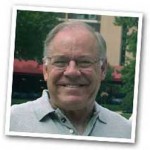 Chuck House, Executive Director of Stanford Media X, leads Stanford University™ Industry Affiliate research program on media and technology, and is a senior research scholar in the Human Sciences and Technology Advanced Research division at Stanford. Previously, he was the director of Societal Impact of Technology for Intel Corporation, and the first Director of Intel™ Virtual Research Collaboratory. He recently co-authored The HP Phenomenon: Innovation and Business Transformation (Stanford University Press, October 2009).
 Colin Milner, Founder and CEO of the International Council on Active Aging (ICAA), is one of the worlds visionaries on the health and well-being of the older adult. Milner is a member of the Global Agenda Councils initiative run by the World Economic Forum, the active-aging spokesperson for the Canadian Association of Fitness Professionals, and the resident industry expert on aging for the International Health, Racquet and Sportsclub Association. An award-winning writer, Milner has authored more than 200 articles on aging-related issues.
 Elizabeth Edgerly, National Spokesperson for Alzheimer’s Association Maintain Your Brain, is the Chief Program Officer for the Alzheimer’s Association and national spokesperson for the Association’s Maintain Your Brain program. She oversees the many programs of the Association for patients, families and health care professionals. In addition, she staffs the Medical Scientific Advisory Council of the Alzheimer’s Association“ Northern California. She received her Ph.D. in clinical psychology at the State University of New York and specialized in geropsychology and neuropsychology. Dr. Edgerly joined the Alzheimer’s Association after completing a fellowship in clinical geropsychology at the Palo Alto VA Hospital.
 Gloria Cavanaugh, Former President of the American Society on Aging, retired in 2006 as President and CEO after leading the organization for 31 years and transforming it from being a regional association to a national one with over 6,000 members. Ms. Cavanaugh is a founding member and former Board Chair of the National Alliance for Caregiving, and served as a Judge for the AARP Best Employers for Workers Over 50 Program. In addition to managing her San Francisco-based consulting practice, Cavanaugh currently serves on the boards of several organizations and coalitions.
 Kenneth Kosik, Co-Director of UC-Santa Barbara Neuroscience Research Institute, holds an M.D. degree from the Medical College of Pennsylvania. From 1980 until 2005 he held various appointments at the Harvard Medical School where he became Professor of Neurology and Neuroscience. In the fall of 2004 he assumed the co-directorship of the Neuroscience Research Institute and the Harriman Chair at the University of California Santa Barbara. He has received multiple awards, including a Whitaker Health Sciences Award from Massachusetts Institute of Technology, the Derek Denny-Brown Neurological Scholar Award from the American Neurological Association, the Zenith Award from the Alzheimer’s Association, and a NASA Group Achievement Award to the Neurolab Science Team.
 Margaret Morris, Senior Researcher at Intel’s Digital Health Group, studies the ways that emerging technologies can enhance mental and physical wellbeing. She conducts ethnographic research to identify needs and works with engineers to develop and evaluate exploratory prototypes. Prior to joining Intel in 2002, she studied technology adoption in Sapient’s Experience Modelling group. Margie completed her Ph.D. in Clinical Psychology with a minor in Behavioural Neuroscience at the University of New Mexico, her clinical internship at the San Francisco VA Medical Centre, and her postdoctoral fellowship at Stanford University. She has a B.A. in English from Haverford College.
 Nigel Smith, AARP Strategy and Planning Director, is responsible for developing decentralized innovation models for AARP and for consulting with business units in the execution of innovation processes. Prior to AARP, Nigel was the Director or Product Innovation for Visa USA. Other professional experiences have been with McKinsey & Company, Goldman Sachs Group, and KPMG. Nigel holds a Masters in Business Administration degree from Stanford University and a Bachelors in Business Administration degree from Howard University.
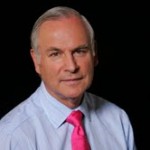 Peter A. Georgescu is Chairman Emeritus of Young & Rubicam Inc., where he previously served as Chairman and CEO. Mr. Georgescu is currently Vice Chairman of New York Presbyterian Hospital and a member of the Council on Foreign Relations, and serves as a board member of several publicly registered companies. In 2006 Mr. Georgescu published his first book The Source of Success — asserting that personal values and creativity are the leading drivers of business success in the 21st Century. Mr. Georgescu’s belief in the power of education has fueled his involvement as a member of A Better Chance’s and Polytechnic University’s Boards of Directors. Mr. Georgescu immigrated to the United States from Romania in 1954, and is the recipient of the Ellis Island Medal of Honor. He was educated at Exeter Academy, received his B.A. with cum laude honors from Princeton and an MBA from Stanford Business School.
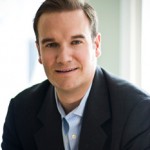 Peter Sims is an author and thought-leader focused on creative thinking, innovation, and leadership. His next book, “Little Bets” (forthcoming from Simon & Schuster: Free Press, 2011) is about doing things to discover what to do, drawing upon the inner-workings of various creative thinking methods to understand how new ideas evolve. Previously, he was coauthor with Bill George of “True North,” the Wall Street Journal and BusinessWeek best-selling book. His work has appeared in Harvard Business Review, Fortune, and USA Today and he has spoken at and advised multiple leading organizations. Previously, Peter worked as a venture capitalist in the U.S. and Europe with Summit Partners.
 Rod Falcon, Director of Health Horizons Program at the Institute For The Future, directs research across a range of health and health care issues with an emphasis on the global health economy: evolving consumer health markets, do-it-yourself health care, the shifting of care outside clinical settings, and the growing number of people turning to technology to become better-than-well. Rod has a B.A. in American history and ethnic studies and an M.P.P. from the University of California, Berkeley. Outside work, Rod keeps busy learning the myriad stories of his own large extended family.
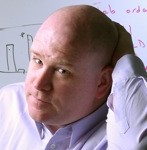 Stephen Macknik, Lab Director at Barrow Neurological Institute, has seen his research and scientific outreach activities featured in the New York Times, The Wall Street Journal,The Chicago Tribune, The Boston Globe, NPR, and Der Spiegel, among hundreds of media stories. He is board member of Scientific American, where he has published several feature articles and for which he published a free monthly online column on the neuroscience of illusions.
 Susan Hoffman, Director of OLLI @ Berkeley, leads the Osher Lifelong Learning Institute within the Vice Provost’s Office for Teaching and Learning at UC Berkeley. For the past fifteen years she has worked at UC and CSU campuses launching new interdisciplinary and international programs. Before then, she served as the Executive Director of the California Confederation of the Arts, representing California artists, art educators and arts organizations in Sacramento and Washington for a decade. Her creative work includes being a writer and filmmaker. Her faculty appointments have been in creative writing, theatre and political philosophy.