Transcript: Alvaro Fernandez on Brain Health and Non-invasive Cognitive Enhancement
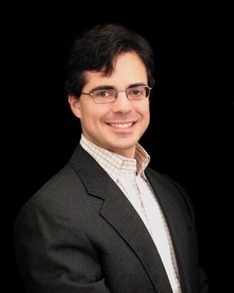
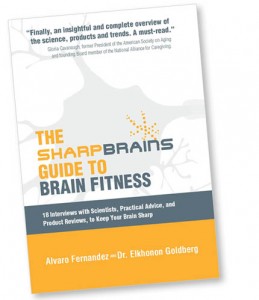 Below you can find the full transcript of our engaging Q&A session yesterday on lifelong cognitive fitness, “mental capitalism”, and more, with Alvaro Fernandez, co-author of The SharpBrains Guide to Brain Fitness, moderated by Harry Moody, Director of Academic Affairs at AARP.
Full Transcript of Live Q&A held on November 15th, 2–3pm ET
2:12
Comment From Rick Moody
Welcome to everyone from Rick Moody at AARP
2:13
AlvaroF: Please ask your questions!
2:13
AlvaroF: Rick and I will moderate them.
2:13
AlvaroF: We had a fun session with Dr. Gary Small last time, and look forward to another good session today.
2:14
Comment From Steve
What are the products that you have reviewed, and what are their differences?
2:14
AlvaroF: Good question, but we need to start before products. The question is, what type of interventions produce what kind of results?
2:15
AlvaroF: We also track lifestyle options such as aerobic exercise, non-products such as meditation and cognitive therapy, technologies such as biofeedback.
2:16
AlvaroF: So, the starting point we discuss in The SharpBrains Guide to Brain Fitness, is that everyone needs to understand how our brains work and what and why we need to enhance. Only then we can make informed decisions about what product, if any, makes sense.
(Editor’s Note: Alvaro didn’t have time to answer the question of what specific products were analyzed. The answer is: twenty one products developed by Nintendo, Learning Enhancement Corporation, Vivity Labs, Scientific Brain Training, Lumos Labs, CogniFit, Dakim, Posit Science, Cogmed, Houghton Mifflin, Scientific Learning, Applied Cognitive Engineering, NovaVision, HeartMath, Wild Divine, InterCure, Helicor.)
2:17
Comment From Rick Moody
There will be no sound; this is text-only interchange.
2:17
Comment From Rick Moody
I think this question is the big one, the one from consumers. It’s of great importance to us at AARP: how to give guidance to consumers?
2:18
AlvaroF: key is to engage and interest consumers in the fact that we all have brains and cognitions that deserve our attention. How to enhance then, how to maintain them…in the same way we take care of our bodies and even of our cars.
2:18
AlvaroF: Brain maintenance, anyone?
2:19
AlvaroF: Then, once consumers and engaged, they need to learn about what is possible and what not, and what tools are becoming available and how to best use them.
2:20
AlvaroF: The field is not about “magic pills” or general solutions, but options in our mental fitness toolkit.
2:20
AlvaroF: Interventions and products can “work” but we need to have realistic expectations about what “works” means
2:20
Comment From Peter Whitehouse
Please address the issue of generalizability of improvements from “programs” into daily life.
2:21
AlvaroF: Great question, Peter. The ultimate objective in my view is not to generalize but to transfer to real life outcomes.
2:22
AlvaroF: That’s why the questions needs to be, what life outcomes do I need to improve on, and then work backwards to figure out what intervention/s may make more sense.
2:22
Comment From Nasrin Lakhani
Are there any studies on brain function improvement with biofeedback intervention
2:23
AlvaroF: Let me link this to Peter’s previous question
2:23
AlvaroF: Biofeedback-based training may not “generalize” to overall intelligence, but certainly it can help to learn how to recognize and regulate stress and emotions better, which is a critical outcome in itself.
2:25
AlvaroF: We mention one product in the book, Resperate, which is basically a biofeedback-based tool to lower blood pressure via self-regulation. Iit is FDA ‑approved, which is very interesting in itself
2:25
Comment From Kate
How soon should we start trying to maintain our brain health, and is it ever too late to try?
2:25
AlvaroF: Never too early, and never too late
2:26
AlvaroF: The UK government run a major research project a few years ago and main take-away was that everyone should invest in their own Mental Capital as early as possible
2:27
AlvaroF: because the objective here is not only the delay of disease/ problems, but the enhancement of our wellness and productivity as citizens
2:27
AlvaroF: Now, different age groups will of course have different priorities.
2:28
AlvaroF: Educational, workforce, driving safety, health-related…what we are talking about is a new framework and toolkit to enhance targeted capacities through life
2:28
Comment From Peter Whitehouse
We need to be carefull about what we mean by FDA approved for devices. It may not mean much evidence about efficacy.
2:28
AlvaroF: Good point. They did show good efficacy too
2:28
Comment From Peter Whitehouse
We need a new form of mental capitalism I guess.
2:29
AlvaroF: We are all mental capitalists :-)
2:29
Comment From Rick Moody
Here’s another thought. Can we begin to identify the typical pitfalls and mistakes that consumers make when they approach brain fitness products? No, I don’t want to publish a “silver fleece” list of boondogles or identify any specific products for criticism, but I’d like to see someone play a “Consumer Reports” role in this whole field.
2:29
AlvaroF: Have you heard of SharpBrains :-)
2:30
AlvaroF: Main problems: consumers buy what they don’t need, and don’t buy what they need
2:30
AlvaroF: But we’re not even talking “brain fitness”, we’re talking supplements, books, classes, tapes…
2:31
AlvaroF: Information is power, and I think most people, not all, would benefit from first of all understanding the basics of cognition, and second what are some key pillars to enhance cognition, and third how can we use specific tools for specific purposes.
2:32
AlvaroF: Let me provide an example
2:32
AlvaroF: One key ingredient for good mental exercise is: Challenge
2:33
AlvaroF: It probably makes little sense for young minds to play more videogames, and older minds to play more crossword puzzles.
2:33
AlvaroF: The level of Challenge would be very limited, because they’re already very familiar with those.
2:34
AlvaroF: But what if kids start doing crossword puzzles and older adults master new videogames?
2:34
Comment From Peter Whitehouse
How about schools and universities etc.? They seem to be in the brain health business.
2:35
AlvaroF: Couldn’t agree more! it is clear that education level is one of the main ingredients in building a protective cognitive reserve
2:36
AlvaroF: Now, what they could be doing better to be full “brain health” providers would be to incorporate other aspects and tools, and eventually even assessments to pinpoint an individidual’s needs and best course of action.
2:36
Comment From Peter Whitehouse
OK I will challenge you! Knowledge and better yet wisdom is power. Undigested and biased information and data can be disempowering.
2:36
AlvaroF: Agreed, the Internet and media today are huge sources of confusion…not of information
2:37
AlvaroF: Which is why at SharpBrains we try to 1) curate resources, 2) educate readers, so they become WISE builders of knowledge
2:37
Comment From Anna G.
Aren’t there ways of increasing brain health that are not products (i.e., fitness, self learning, nutrition, etc.) that are just as effective?
2:38
AlvaroF: Yes, we jumped into the product discussion too early. In the book we start with a much more comprehensive discussion of main lifestyle factors, and of “non-product” brain training techniques such as meditation. Now, products also play a role.
2:39
AlvaroF: And a key take-away is that most interventions do NOT substitute each other, but they AUGMENT each other.
2:39
Comment From Peter Whitehouse
Right so with SharpBrains start evaluating these kind of interventions. Where do we spend out money individually and socially for best value?
2:40
AlvaroF: BIG question.…as an overall theme I’d say, Spend more time and money on non-invasive interventions that build capacity.
2:41
AlvaroF: The starting point in all this is that day after day we see how malleable core mental abilities such as attention, working memory, self-regulation, processing…are. So, let’s all be mental capitalists by investing in our capacities
2:42
AlvaroF: This framework is different, but complements, the standard medical model based on diseases.
2:42
Comment From Anand Deoskar
I think a really interesting question is — what stimulates individuals to think? What is the key motivating factor for each individual to apply their brains — to speak up, to challenge themselves.
2:43
AlvaroF: Great question. Last year Marian Diamond opened our annual virtual conference. After the conference we had lunch and I asked her, what do you think is the most important personal characteristic you’d like everyone to have?
2:44
AlvaroF: Her answer: curiosity
2:44
AlvaroF: Curiosity will drive us to learn, and master new realities, and thinking come handy then.
2:45
Comment From Rick Moody
Anand Deoskar’s comment points us in the direction of genuine education and human development, which is not what the brain fitness industry has primarily been about.
2:45
AlvaroF: The problem with the “brain fitness industry” is that is gets associated with the PBS programs
2:46
AlvaroF: SharpBrains and many many many people in our network care about human development, but we so far have had little voice in the mainstream media.
2:47
AlvaroF: Having said that, we also see the value in new tools when used well, which many people in “human development” don’t seem to. We’re above all pragmatic and outcome-oriented
2:47
Comment From Nasrin Lakhani
How would you finish the phrase “Investing in our mental capacities causes/enables.….….…”
2:48
AlvaroF: …enhanced wellness, control of one’s destinies, and longer productive lives. It also helps protect against decline by delaying it (not preventing it)
2:49
Comment From Guest
Alvaro, Have you had any communication with insurance companies to see if they intend to pay wellness dollars for people to take brain health and wellness courses? They frequently pay for gym memberships for physical fitness — are they getting active in mental fitness?
2:49
AlvaroF: Yes, and no. Insurance companies now see this mainly as a marketing opportunity — if more consumers show they care about this, the insurers will follow.
2:51
AlvaroF: A few of them are doing their own trials to see if they’d like to offer products for free or reimburse them, but it is still in the very early stages. The key is that consumers keep driving interest ‑otherwise, insurers say they have a trillion other important things to do.
2:52
AlvaroF: The same goes for payers and providers: consumer interest can motivate them to take action, and that would help enhance the rationality and maturity of the field
2:52
Comment From Gerard Finnemore
Another issue is that the medical profession (often in the role of gatekeepers) tend to be skeptical about cognitive training/enhancement. Usually, this is due to ignorance
2:53
AlvaroF: Well, yes and no. Sure, there’s much ignorance about cognition (please ask your doctor to define what “working memory” is), but also they play an important role to protect from the usual nonsense consumers are exposed to.
2:55
Comment From Rick Moody
I know we have only a few minutes left. This is one step in a long journey. Alvaro and I co-host a Brain Fitness Lunch Group at AARP in Washington, and we hope to continue these conversations both in person and on-line.
2:55
Comment From Alan
How does one know the best investment strategy to optimize individual capacities across the entire range of human abilities? Is there a most general approach, and if not, how does one individualize the investment?
2:57
AlvaroF: For people with $15 to spare, I’d say read The SharpBrains Guide to Brain Fitness and see what specific next step makes sense for you given the information discussed there. For those without, I’d say integrate elements of Novelty, Variety and Challenge in one’s lives and careers, in whatever form or shape that may be possible.
2:58
Comment From Rick Moody
Another factor is is the prominent case of the NIH “jury” of experts which concluded that “nothing works” in terms of preventing Alzheimer’s (last year, I think, but maybe I don’t remember so well.…)
3:00
AlvaroF: That is true, but the same review found that there are things we can do to lower risk of cognitive decline, which is another important outcome. What that NIH panel wasn’t set up to answer was most of the discussion we had above: what can we do today to enhance our cognitive/ emotional/ executive capacities today and tomorrow? it is a different question.
3:01
Comment From Rick Moody
Goodbye to all
3:01
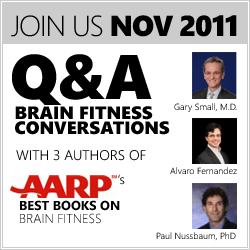
AlvaroF: Thank you for a fun conversation. Fyi, we’ll publish the transcript via sharpbrains.com by the end of the day. And remember we’ll have Paul Nussbaum next Tuesday!
 3:01
3:01
AlvaroF: Bye Rick and everyone else
Related articles:
Share this:

About SharpBrains
Top Articles on Brain Health and Neuroplasticity
Top 10 Brain Teasers and Illusions
Got the book?