Sharp Brains: Brain Fitness and Cognitive Health News

Neuroplasticity, Brain Fitness and Cognitive Health News

Test your Brain with these Top 10 Visual Illusions

Visual illu­sions are fun and inter­est­ing: They can tell us a lot about our brain.

The brain has two hemi­spheres, each divided into four lobes. Each lobe is respon­si­ble for dif­fer­ent func­tions. For instance the frontal cor­tex (in blue here) is respon­si­ble for deci­sion mak­ing and plan­ning; the tem­po­ral lobe (in green) for lan­guage and mem­ory; and the pari­etal lobe (in yel­low) for atten­tion and spa­tial skills. The occip­i­tal lobe (in red) is entirely devoted to vision: It is thus the place where visual illu­sions happen.

The frontal lobe rep­re­sents 41% of total cere­bral cor­tex vol­ume; the tem­po­ral lobe 22%; the pari­etal lobe 19%; and the occip­i­tal lobe 18%.

There is thus a huge part of our brain devoted to pro­cess­ing visual infor­ma­tion. How the visual sys­tem processes shapes, col­ors, sizes, etc. has been researched for decades. One way to under­stand more about this sys­tem is to look at how we can trick it, that is to look at how the brain reacts to visual illusions.

.

Here are 10 visual illu­sions to com­bine fun and learn­ing about the visual system.

We know you know there is a trick since these are illu­sions… but don’t try to be smarter than your brain: Just enjoyed being tricked!

To go beyond the illu­sions, read about what hap­pens in your brain while you expe­ri­ence them.


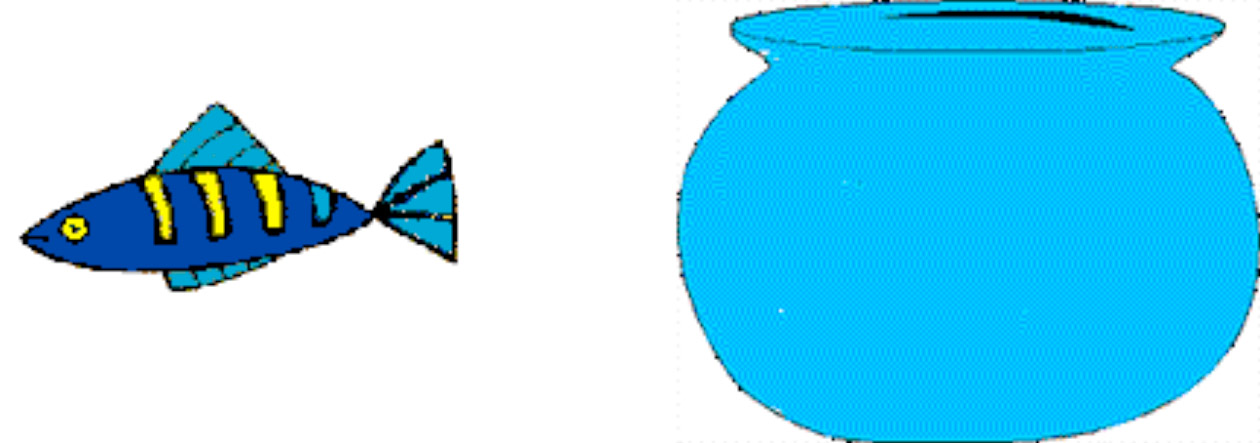
1. Can you put the fish in the fishbowl?

Stare at the yel­low stripe in the mid­dle of the fish in the pic­ture below for about 10–20 sec. Then move your gaze to the fish bowl.
.

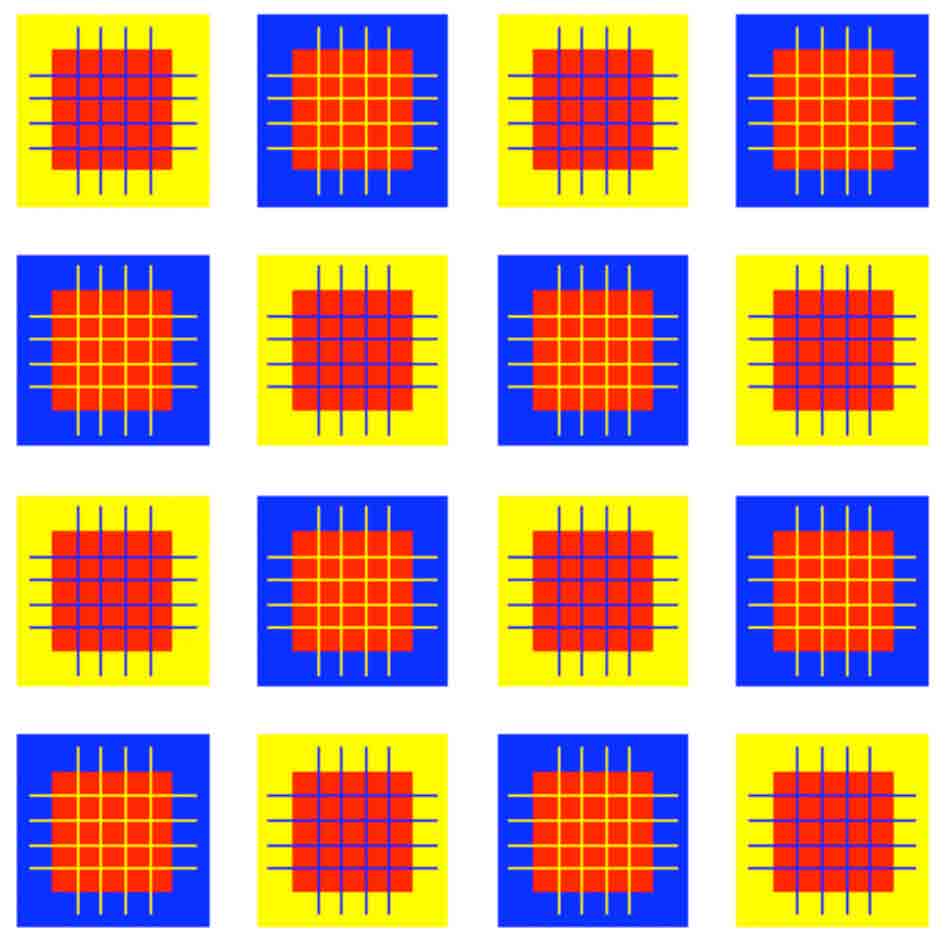
2. Are the squares inside the blue and yel­low squares all the same color?

.

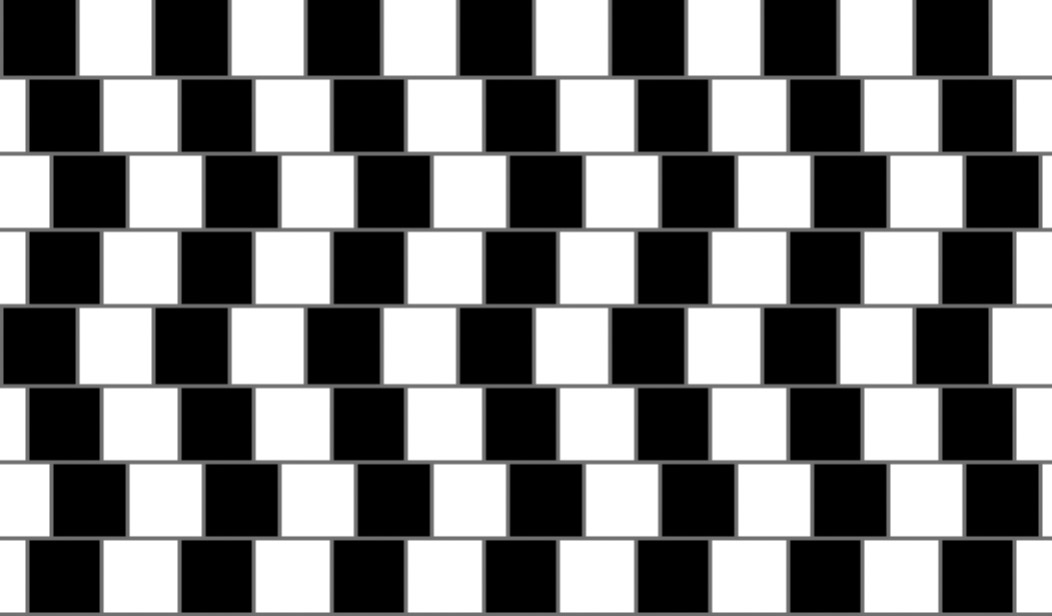
3. Are the hor­i­zon­tal lines straight or crooked?

.

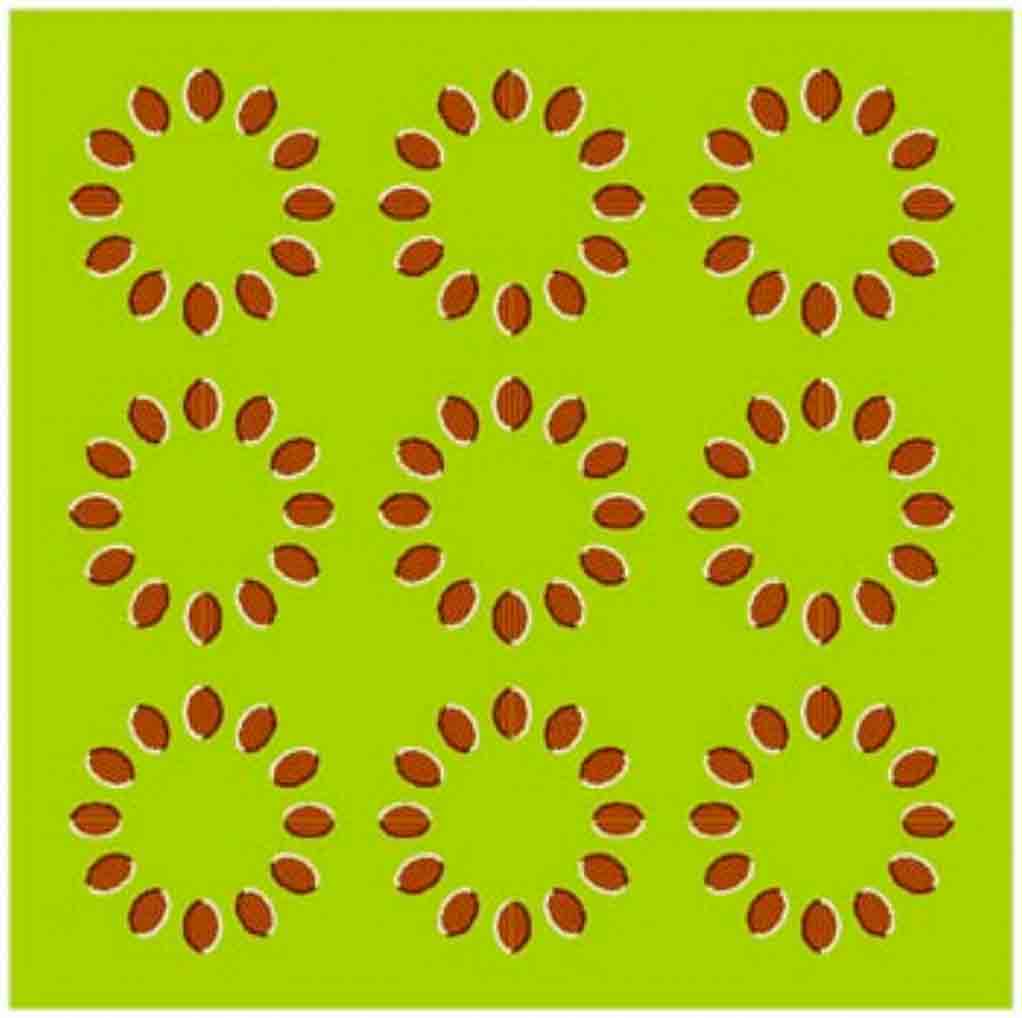
4. Are the cir­cles sta­tic or moving?

.

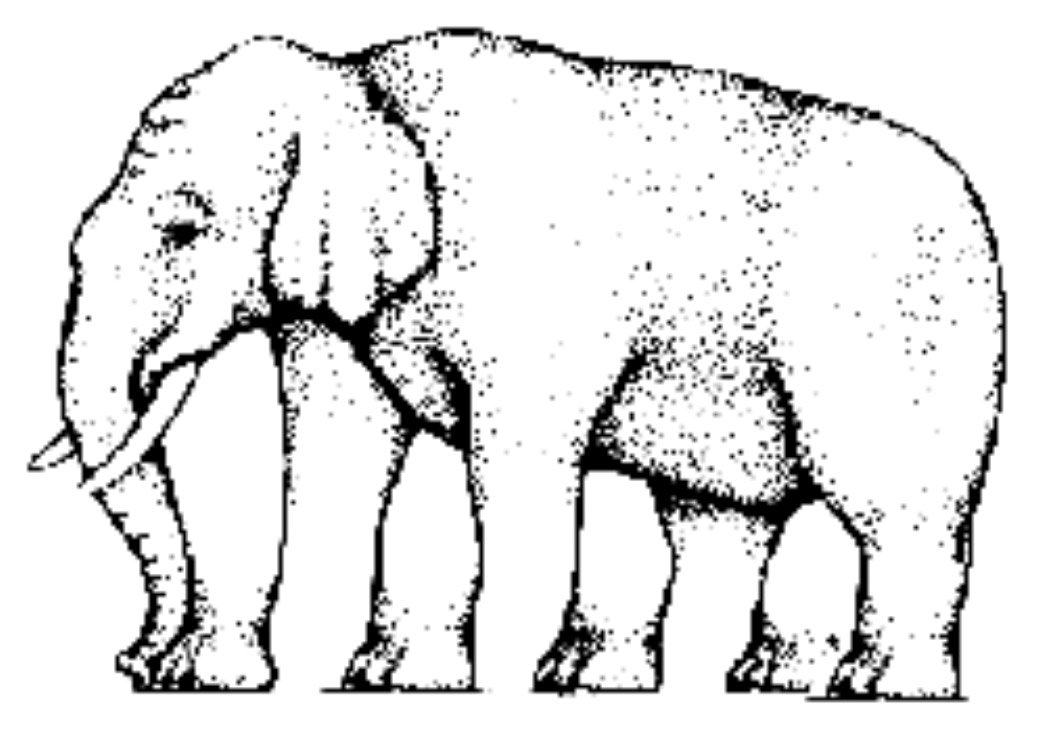
5. How many legs does this ele­phant have?

.

6. Are the two hor­i­zon­tal lines of the same length?

.

7. Do you see gray dots at the inter­sec­tions of the white lines?

.

8. Are the two orange cir­cles of the same size?

.

9. Does Lincoln’s face look normal?

.

10. Can you see a baby?

.

Check your answers and learn about what was going on in your brain while you expe­ri­enced each of these illusions:

1. Can you put the fish in the fishbowl?

Did you see a fish of a dif­fer­ent color in the bowl? You have just expe­ri­enced an after­im­age.
In the retina of your eyes, there are three types of color recep­tors (cones) that are most sen­si­tive to either red, blue or green. When you stare at a par­tic­u­lar color for too long, these recep­tors get “fatigued.” When you then look at a dif­fer­ent back­ground, the recep­tors that are tired do not work as well. There­fore, the infor­ma­tion from all of the dif­fer­ent color recep­tors is not in bal­ance. This will cre­ate the color “afterimages.”

.

2. Bezold effect

The smaller squares inside the blue and yel­low squares are all the same color. They seem dif­fer­ent (magenta and orange) because a color is per­ceived dif­fer­ently depend­ing on its rela­tion to adja­cent col­ors (here blue or yel­low depend­ing on the outer square).

.

3. Café Wall Illusion

The hor­i­zon­tal lines are straight, even though they do not seem straight.  In this illu­sion, the ver­ti­cal zigzag pat­terns dis­rupt our hor­i­zon­tal perception.

.

4. Illu­sory Motion

The cir­cles do appear to be mov­ing even though they are sta­tic. This is due to the cog­ni­tive effects of inter­act­ing color con­trasts and shape position.

.

5. How many legs does this ele­phant have?

Tricky, isn’t it?! This pic­ture is an impos­si­ble pic­ture that also con­tains some sub­jec­tive con­tours, such as the Kanizsa Tri­an­gle below: A white tri­an­gle (point­ing down) can be seen in this fig­ure even though no tri­an­gle is actu­ally drawn. This effect is known as a sub­jec­tive or illu­sory con­tour. The con­tour of the tri­an­gle is cre­ated by the shapes around it.

.

6. The Mueller-Lyer Illusion

The two hor­i­zon­tal lines are of the same length, even though the one at the bot­tom seems longer.
As you know, the visual angle gets smaller with dis­tance, so the brain auto­mat­i­cally per­ceives objects at far­ther dis­tances to be big­ger.
In gen­eral, lines that have inward flaps, such as cor­ner of a build­ing, are rel­a­tively the near­est points of the over­all object. Sim­i­larly, lines with out­ward flaps are found at the longer dis­tance, as the far­thest cor­ner of a room.
So in the Mueller-Lyer illu­sion, the brain per­ceives the line with out­ward flaps to be at a far­ther point as com­pared to the line with inward flaps. Con­se­quently, the brain per­ceives the line with out­ward flaps to be longer.

.

7. Her­mann grid illusion

There are not gray dots in this grid. How­ever “ghost­like” gray blobs are per­ceived at the inter­sec­tions of the white lines. The gray dots dis­ap­pear when look­ing directly at an inter­sec­tion.
This illu­sion can be explained by a neural process hap­pen­ing in the visual sys­tem called lat­eral inhi­bi­tion (the capac­ity of an active neu­ron to reduce the activ­ity of its neighbors).

.

8. The Ebbing­haus Illusion

The two orange cir­cles are exactly the same size, even though the one on the left seems smaller.
This size dis­tor­tion may be caused by the size of the sur­round­ing cir­cles or by their dis­tance to the cen­ter circle.

.

9. Does Lincoln’s face look nor­mal?

It seems nor­mal but now, look at it upright: Lincoln’s eyes do not look quite right!

Some neu­rons in the brain seem spe­cial­ized in pro­cess­ing faces. Faces are usu­ally seen upright. When pre­sented upside down, the brain no longer rec­og­nizes a pic­ture of a face as a face but rather as an object. Neu­rons pro­cess­ing objects are dif­fer­ent from those pro­cess­ing faces and not as spe­cial­ized. As a con­se­quence these neu­rons do not respond to face dis­tor­tions as well. This explains why we miss the weird eyes when the face is inverted.

.

10. Can you see a baby?

Another great exam­ple of an illu­sory con­tour! The baby’s head is on the left, the baby’s feet are against the trunk of the tree on the right.

.

I hope you had fun and learned inter­est­ing facts about your brain!

Let’s end by enjoy­ing a pic­ture cre­ated by the mas­ter of illu­sion: M. C. Escher


Be Socia­ble, Share!

Face­book Responses

Print This Article Print This Article Email This Post Email This Post

Categories: Brain Teasers

Tags: , , , , ,

Welcome to SharpBrains!

As seen in The New York Times, The Wall Street Jour­nal, CNN and more, Sharp­Brains is an inde­pen­dent mar­ket research and inno­va­tion think tank track­ing brain fit­ness and applied neu­ro­plas­tic­ity research and mar­ket­place. AARP recently named The Sharp­Brains Guide to Brain Fit­ness a Best Book on the subject.

Upcoming Event

Sponsored Ad

Top 30 Articles

  1. Top 50 Brain Teasers, by Sharp­Brains Team
  2. The Ten Habits of Highly Effec­tive Brains, by Alvaro Fernandez
  3. Why do You Turn Down the Radio When You’re Lost?, by Car­o­line Latham
  4. Brain Plas­tic­ity: How learn­ing changes your brain, by Pas­cale Michelon
  5. Top 10 Brain Fit­ness Future Trends, by Alvaro Fernandez
  6. 7 FAQs on Men­tal Exer­cise, by Alvaro Fernandez
  7. It is Not Only Cars That Deserve Good Main­te­nance: Brain Care 101, by Alvaro Fernandez
  8. Eval­u­a­tion Check­list for Brain Fit­ness prod­ucts and games, by Alvaro Fernandez
  9. MIT Event on Brain Games: Con­text, Trends, Ques­tions, by Alvaro Fernandez
  10. Stress Man­age­ment Work­shop for Inter­na­tional Women’s Day, by Alvaro Fernandez
  11. Mind­ful­ness and Med­i­ta­tion in Schools for Stress Man­age­ment, by Jill Sutie
  12. Stress and Neural Wreck­age: Part of the Brain Plas­tic­ity Puz­zle, by Gre­gory Kellet
  13. How can I improve my short term mem­ory?, by Car­o­line Latham
  14. Cog­ni­tive and Emo­tional Devel­op­ment Through Play, by David Elkind
  15. Judith Beck: Train Your Brain to Think Like a Thin Per­son, by Alvaro Fernandez
  16. Easy Steps to Improve Brain Health, by Car­o­line Latham
  17. Info­graphic: State of the Mar­ket 2009, by Paul Van Slembrouck
  18. Improve Mem­ory with Sleep, Prac­tice, and Test­ing, by Bill Klemm
  19. 10 Brain Tips To Teach and Learn, by Lau­rie Bartels
  20. Dr. Elkhonon Gold­berg on Cog­ni­tive Train­ing and Brain Fit­ness, by Alvaro Fernandez
  21. Max­i­mize the Cog­ni­tive Value of Your Men­tal Work­out, by Schlomo Breznitz
  22. Brain Fit­ness Pro­gram and Neu­ro­plas­tic­ity @ PBS, by Alvaro Fernandez
  23. Mind­ful­ness Med­i­ta­tion for Adults & Teens with ADHD, by David Rabiner
  24. Can Intel­li­gence Be Trained? Mar­tin Buschkuehl shows how, by Alvaro Fernandez
  25. How Strong is the Research Sup­port for Neu­ro­feed­back in Atten­tion Deficits?, by David Rabiner
  26. Exer­cis­ing the body is exer­cis­ing the mind, by Adrian Preda
  27. Brain Evo­lu­tion and Why it is Mean­ing­ful Today to Improve Our Brain Health, by Larry McCleary
  28. Phys­i­cal Exer­cise and Brain Health, by Pas­cale Michelon
  29. Posit Sci­ence, Nin­tendo Brain Age, and Brain Train­ing Top­ics, by Alvaro Fernandez
  30. Sleep, Tetris, Mem­ory and the Brain, by Shan­non Moffet
Enter Your Email and Sub­scribe to our free Monthly eNewslet­ter:
Join more than 40,000 Sub­scribers and stay informed and engaged.

Monthly Blog Archives