

Is Intelligence Innate and Fixed?
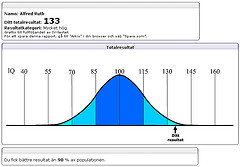 Given the recent James Watson “race and IQ” controversy, I took on to read Stephan Jay Gould’s classic book The Mismeasure of Man, in which he debunks IQ (and the underlying “g”) as measure of defined, innate, “intelligence”. Fascinating reading overall, very technical in some areas.
The key take-away? In the last chapter, A Positive Conclusion, he writes that
- “Flexibility is the hallmark of human evolution…In other mammals, exploration, play and flexibility of behavior are qualities of juveniles, only rarely of adults. We retain not only the anatomical stamp stamp of childhood, but its mental flexibility as well…Humans are learning animals”
He then relates this story from T.H. White’s novel The Once and Future King
- God, he recounts, created all animals as embryos and called each before his throne, offering them whatever additions to their anatomy they desired. All opted for specialized adult features-the lion for claws and sharp teeth, the deer for antlers and hoofs. The human embryo stepped forth last and said: Please God, I think that you made me in the shape which I now have for reasons best known to Yourselves and that it would be rude to change. If I am to have my choice, I will stay as I am. I will not alter any of the parts which you gave me…I will stay a defenceless embryo all my life, doing my best to make myself a few feeble implements out of the wood, iron, and the other materials which You have seen fit to put before me..” “Well done”, exclaimed the Creator in delighted tone. “Here all you embryos, come here with your beaks and whatnots to look upon Our fist Man. He is the only one who has guessed Our riddle…As for you, Man…You will look like an embryo till they bury you, but all the others will be embryos before your might. Eternally undeveloped, you will always remain potential in Our image, able to see some of Our sorrows and to feel some of Our joys. We are partly sorry for you, Man, but partly hopeful. Run along then, and do your best”
For related posts, you may enjoy
Darwin’s adult neuroplasticity, with a number of fascinating quotes, including
- “Therefore my success as a man of science, whatever this may have amounted to, has been determined, as far as I can judge, by complex and diversified mental qualities and conditions. Of these, the most important have been–the love of science– unbounded patience in long reflecting over any subject–industry in observing and collecting facts–and a fair share of invention as well as of common sense. With such moderate abilities as I possess, it is truly surprising that I should have influenced to a considerable extent the belief of scientific men on some important points.”
And Richard Dawkins and Alfred Nobel: beyond nature and nurture
- We have at least the mental equipment to foster our long-term selfish interests rather than merely our short-term ones…We have the power to defy the selfish genes of our birth and, if necessary, the selfish memes of our indoctrination. We can even discuss ways of deliberately cultivating and nurturing pure, disinterested altruism-something that has no place in nature, something that has never existed before in the whole history of the world. We are built as gene machine and cultured as meme machines, but we have the power to turn against our creators. We, alone on earth, can rebel against the tyranny of the selfish replicators.”
You guessed right. We are not big fans of the idea of intelligence as a fix, innate characteristic we are born with. Genes predispose us, but it is the combination of our environments and our actions that we better focus on.
We also need to add better measures of, and training for, Flexibility, Adaptability, and Learning how to Learn, and a number of other cognitive abilities, to our view of “intelligence”, so we can “evolve” faster in our lifetimes.
Pic: credit to Dampfred, via Flickr
Share this:

13 Comments
About SharpBrains
Top Articles on Brain Health and Neuroplasticity
Top 10 Brain Teasers and Illusions
Got the book?

Very good message, Alvaro!
It’s our mission to tell people that genes create phenotype just with the effect of the environment.
Gould is almost on the verge of dishonesty with his book. If you are going to read his book, then you should at least read a good defense of Watson The link is here.
http://www.gnxp.com/blog/2007/10/james-watson-tells-inconvenient-truth_296.php
Thank you, Berci, yes, we need to improve awareness of that fact and its implications.
Hello “Reason”:
1- I think James Watson is an incredible scientist, and am sorry about the recent controversy. Now, he may benefit from explaining his views in a better way, and focusing on the areas he is no doubt an authority.
2- Gould wrote his book 26 years ago, so I am unsure about the relevance on your comment. He obviously wasn’t attacking Watson, but the ideas about IQ as a fixed, innate, entity.
3- I took a brief look at that link. The author relies on the basic assumption that IQ is fixed, innate, real. Which is not correct.
Its terribly PC to say that genetics makes hardly any difference to IQ or IQ makes hardly any difference to, er anything. Great for getting readers attention and nods of agreement.
Its also complete bollocks.
Twin studies (and certainly any twins I know) as well as a simple glance at anyone I know shows and incredibly strong correlation between genetics and intelligence, personality and all sorts of other things such as skin colour and eye colour.
Of course bias and overgeneralizations are common flaws in such research but that doesn’t mean that they are automatically flawed in more fundamental ways. Nor does the fact that some might misinterpret it, make the base research flawed.
I remember sitting in a class being taught about the bell curve while a group from a higher bell curve sniggered in front and I thought. Hmm — what curve you associate yourself with doesn’t change your actual intelligence.
probably worth a read of the
http://en.wikipedia.org/wiki/The_Mismeasure_of_Man
for the critiques (and praises I guess)
Hello GNZ,
Thanks for the Wikipedia link.
No one doubts genetics has an influence. Even an strong influence. The point is that that factor is way less deterministic than the other examples you mention, like skin and eye colour. Our point is not that genes have no influence. It is that intelligence is not fixed, innate.
Have you read about the Flynn effect? do you think our genes have changed so much in 50 years to make us all now, on average, 15–20 points more “intelligent” (IQ) than 50 years ago?
I accept that intelligence is not 100% determined by genes – anyone who says that is obviously not thinking since, for one thing, I could drink alcohol and take drugs until I was brain damaged or dead and I definitely wouldn’t have the same IQ afterwards. But surely no one ever proposes that that would have no impact on my intelligence.
Clearly it is a mixture of things. What appears to happen, though, is that someone will propose that a certain group has a higher average intelligence (Let us say, ‘philosophers’ have a higher average intelligence than ‘ditch diggers’ or ‘people in Manhattan’ have a higher average IQ than ‘people in the middle of Texas’). Those groups that are maligned then kick back and insist that one can’t say that. Rather less an argument that it isn’t true and more one that you “just can’t say it†because then you might try to use it for somthing. And one side debates with logic and the other with more of a ‘aren’t they disgusting and mean†sort of approach.
(having siad that sometimes they are jsut plain racist ofcourse)
Regarding the Flynn effect, I guess it depends on what you call intelligence. I read the Flynn effect according Flynn was explained by how we organize information — i.e. it didn’t refer to a change in processing speed — just a change in the way the information being processed was organized. That’s one theory anyway.
It would seem however that as IQ tests get better it gets more constant (Of course we would discard a IQ methodology that got a less constant result!). But if for some reason one had to discard ‘IQ†and instead use a new measure for ‘g’ I don’t think people would be very worried.
I note that I had an IQ test at a very young age and another reasonably recently both under proper test conditions – and got an identical result (yes not a single point of difference). Apparently the vast majority of my life and all that education made no difference at all.
Regarding Crick I think that this triggers my racist bells “He went on to say that although he hopes all races are equally intelligent, “people who have to deal with black employees find this is not true.“†But there could be a valuable piece of truth in “he is “inherently gloomy about the prospect of Africa†(although the truth might be dangerous, and if someone honestly says so I can respect that)
Even if our intelligence happens to be absolutely identical across races – it won’t be ‘the same’ on average (ie of exactly the same type). One model that seems to have some relation to reality is that people are most able to deal with capitalism in places where they have (as a genealogical line) had the longest exposure to money (again potentially dangerous but also implies that changes happen over ‘short’ period of time).
For GNZ:
“Regarding Crick I think that this triggers my racist bells “He went on to say that although he hopes all races are equally intelligent, “people who have to deal with black employees find this is not true.“â€Â
You meant Watson.
(I have the same problem with Abbott and Costello.)
woops appologies to Crick.
You can talk openly about dogs without being politically incorrect. You won’t get into trouble, lose your career or research grants, as you might if you reveal unpleasant truths about humans.
All domestic dogs, from Chihuahua to Great Dane, are species canis familiaris; breed genetic differences result from enforced separations by breeders/trainers for the last 800 years. Domestic dogs are all one species. Similarly, all humans are species homo sapiens with race differences resulting from separation over thousands of years by geographic barriers. Dog breeds and human races are directly analogous as sub-groups within the respective species.
Much can be learned from studying dogs; medical science does a great deal of this to avoid experimentation on humans. The brain is no exception, as dog brain structure and information flow processes are quite similar to that in humans. Numerous dog brain studies to analyze human brain diseases/conditions are in the medical literature.
Any experienced dog breeder will acknowledge the profound influence of genetics on intelligence and behavior. Traits such as trainability, aggression, prey drive, docility, bite inhibition are highly heritable and difficult to modify. Extensive evaluations of dog intelligence have developed breed rankings according to ease of training (number of repetitions needed to learn a command) and reliability (percent of time) of correct response to learned commands. Instinctive ability to to take correct action in complex situations is also recognized to vary with breed (there is a valid reason police K‑9 units use German Shepherds instead of Pit Bulls). Among dog breeds, there is a huge Achievement_Gap, and it is GENETIC. This is all easily Googled…
Humans are not exempt from the fundamental rules of biology. Rushton’s publications (and James Watson’s recent comments) are heavily-supported with mountains of peer-reviewed research by well-credentialed scholars; numerous key citations are available in two recent books: Hart “Understanding Human History” and Lynn “Race Differences in Intelligence.”
Hello,
Thanks for adding that angle, but I think it confuses things more than clarifies them.
1) No one is doubting the influence of genes. I agree with “Humans are not exempt from the fundamental rules of biology”
2) What you seem to be doubting is the influence of the environment. Why?
3) The statement “Dog breeds and human races are directly analogous as sub-groups within the respective species.” is highly suspicious
4) Even if it were, humans and dogs are different species, correct? and it is humans who domesticate dogs, not the other way, right? so perhaps, no matter what you say about dogs, that is not the most relevant in our debate regarding the human species
5) Can you please explain the Flynn effect?
6) Malcolm Gladwell just published a great article on this,
http://www.newyorker.com/arts/critics/books/2007/12/17/071217crbo_books_gladwell
“1) No one is doubting the influence of genes. I agree with “Humans are not exempt from the fundamental rules of biology”
2) What you seem to be doubting is the influence of the environment. Why?”
I know I’m really late to this, but you’ve got it backwards: there are literally no scientists who think/argue/hypothesize that intelligence is 100% genetic or hereditary. Being a “genetic determinist” in practice means that you think that somewhere between 1% and 99% (and, on average, more like 40% and 80%) of intelligence is hereditary.
There are, on the other hand, quite a few who argue that intelligence is 0% genetic.
As for Crick, it seems he was saved from being burnt at the stake by going off the scene early. ” In brief I think it likely that more than half the difference between the average I.Q. of American whites and Negroes is due to genetic reasons, and will not be eliminated by any foreseeable change in the environment” would have gotten him the Watson treatment in 2007, to be sure.
Anyway, it’s rather amusing to read this and realize that, by Gould’s definition, Alvaro is a genetic determinist.
All that aside, we’d be better off if people stopped reading a 28 year old book by a paleontologist who wanted to advance the blank slate theory, creating a book that essentially everyone in the relevant field thinks is a pile of garbage.
Go argue about twins studies, trans-racial adoption studies, etc, but leave Mr. “IQ tests 80 years ago were biased, so the entire field is junk!” out of it.
Sideways: you are answering yourself… when you don’t contradict yourself.
May I suggest you spend less time on word gymnastics (i.e. setting up your own definitions of genetic determinism) and more on comprehending other’s perspectives with a research, not ideological, hat (and, yes, that includes Gould’s book), and focusing on implications.
Perhaps, by having a more meaningful conversation, we would both be closer to reaching the 100% of our potential.