

Neuroplasticity 101 and Brain Health Glossary
Given the growing number of articles in the popular press mentioning words such as “neuroplasticity”, “fMRI” and “cognitive reserve”, let’s review some key findings, concepts and terms.
First, a prescient quote by Spanish neuroscientist Santiago Ramon y Cajal (1852–1934): “Every man can, if he so desires, become the sculptor his own brain”.
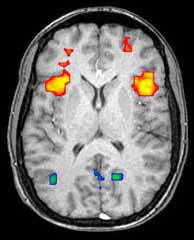 Thanks to new neuroimaging techniques, regarded “as important for neuroscience as telescopes were for astronomy, neuroscientists and cognitive psychologists have been finding that the brain has a number of “core capacities” and “mental muscles” that can be exercised through novelty, variety and practice, and that exercising our brain can influence the generation of new neurons and their connections. Brain exercise is being recognized, therefore, as a critical pillar of brain health, together with nutrition, physical exercise and stress management.
Previous beliefs about our brain and how it works have been proven false. Some beliefs that have been debunked include claims that adult brains can not create new neurons (shown to be false by Berkeley scientists Marian Diamond and Mark Rosenzweig, and Salk Institute’s Fred Gage), notions that working memory has a maximum limit of 6 or 7 items (debunked by Karolinska Institute Torkel Klingberg), and assumptions that the brain’s basic processes can not be reorganized by repeated practice (UCSF’s Drs. Paula Tallal and Michael Merzenich). The “mental muscles” we can train include attention, stress and emotional management, memory, visual/ spatial, auditory processes and language, motor coordination and executive functions like planning and problem-solving.
Mental stimulation is important if done in the right supportive and engaging environment. Stanford’s Robert Sapolsky has proven that chronic stress and cortical inhibition, which may be aggravated due to imposed mental stimulation, may prove counterproductive. Having the right motivation is essential.
A surprising and promising area of scientific inquiry is Mindfulness-Based Stress Reduction (MBSR). An increasing number of neuroscientists (such as University of Wisconsin-Madison’s Richard Davidson) are investigating the ability of trained meditators to develop and sustain attention and visualizations and to work positively with powerful emotional states and stress through the directed mental processes of meditation practices.
And now, some keywords:
Brain Fitness Program: structured set of brain exercises, usually computer-based, designed to train specific brain areas and processes in targeted ways.
Chronic Stress: ongoing, long-term stress, which blocks the formation of new neurons and negatively impacts the immune system’s defenses.
Cognitive training (or Brain Fitness Training): the field of brain exercises designed to help work out specific “mental muscles. The principle underlying cognitive training is to help improve “core” abilities, such as attention, memory, processing speed, problem-solving.
Cognitive Reserve (or Brain Reserve): theory that addresses the fact that individuals vary considerably in the severity of cognitive aging and clinical dementia. Mental stimulation, education and occupational level are believed to be major active components of building a cognitive reserve that can help resist the attacks of mental disease.
fMRI: functional magnetic resonance imaging (fMRI) is a non-invasive neuroimaging technique that enables researchers see images of changing blood flow in the brain associated with neural activity. This allows images to be generated that reflect which structures are activated (and how) during performance of different tasks.
Heart Rate Variability (HRV): describes the frequency of the cardiac cycle, and is one of the best predictors of stress and anxiety. Our hear rate is not “flat” or constant: HRV measures the pattern of change.
Mindfulness-Based Stress Reduction (MBSR): yoga and meditation practices designed to enable effective responses to stress, pain, and illness.
Neurogenesis: the process by which neurons are created all throughout our lives.
Neuroimaging: techniques that either directly or indirectly image the structure, function, or pharmacology of the brain. Recent techniques (such as fMRI) have enabled researchers to understand better the living human brain.
Neuroplasticity: the brain’s ability to reorganize itself by forming new connections throughout life.
PubMed: very useful tool to search for published studies. “PubMed is a service of the U.S. National Library of Medicine that includes over 16 million citations from MEDLINE and other life science journals for biomedical articles back to the 1950s. PubMed includes links to full text articles and other related resources.”
Working memory: the ability to keep information current for a short period while using this information. Working memory is used for controlling attention, and deficits in working memory capacity lead to attention problems. Recent research has proven that working memory training is possible and helpful for people with ADD/ ADHD.
Any other keyword you would like explained?
Share this:

6 Comments
About SharpBrains
Top Articles on Brain Health and Neuroplasticity
Top 10 Brain Teasers and Illusions
Got the book?
I would like you to add self-directed neuroplasticity, Alvaro.( We talk about that at Brains on Purpose.) I think it is important to distinguish self-directed neuroplasticity from neuroplasticity.
Have your read “The Compassionate Brain†by Gerald Huther? It’s very good on neuroplasticity. As is Sharon Begley’s “Change Your Mind, Train Your Brain.”
Hello Stephanie, the most important thing first is for people to understand what neuroplasticity is and how it happens…we can later talk about more specific options. “self-directed” applies to many of those concepts, not just neuroplasticity. You will enjoy my last post
https://sharpbrains.com/blog/2007/09/12/every-man-can-if-he-so-desires-sculpt-his-own-brain/
Michael, many thanks for the suggestions. I enjoyed Begley’s book; and will take a look at Huther’s. Here you have a list of books we recommend
https://sharpbrains.com/get-started/books/
I am always fascinated by the study of the brain. The brain’s capabilities are amazing. I think there are a great benefits in brain exercises. Why wouldn’t we be able to improve our brain muscle?! Thank you for contributing your article to Fitness for Moms Blog Carnival.
Thank you, Cindy. My wife is pregnant (our first kid) so we need to start thinking about fitness for moms…
CAN YOU FIND YOUR TYPO AS YOU SCROLL DOWN?
WOULD YOU LIKE TO REWARD ME WITH A FREE COMPUTER GAME TO IMRPOVE MY BRAIN?
LOVE AND KINDNESS — TROB
Cognitive training (or Brain Fitness Training): the field of brain exercises designed to help work out specific “mental musclesâ€Â. The principle underlying cognitive training is to help improve “core” abilities, such as attention, memory, processing spped, problem-solving.