Sharp Brains: Brain Fitness and Cognitive Health News

Build Your Cognitive Reserve-Yaakov Stern

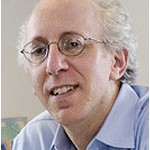
Yaakov SternDr. Yaakov Stern is the Division Leader of the Cognitive Neuroscience Division of the Sergievsky Center, and Professor of Clinical Neuropsychology, at the College of Physicians and Surgeons of Columbia University, New York.

He is one of the leading proponents of the Cognitive reserve theory, which aims to explain why some individuals with full Alzheimer’s pathology (accumulation of plaques and tangles in their brains) can keep normal lives until they die, while others -with the same amount of plaques and tangles- display the severe symptoms we associate with Alzheimer’s Disease. He has published dozens of peer-reviewed scientific papers on the subject.

The concept of a Cognitive Reserve has been around since 1989, when a post mortem analysis of 137 people with Alzheimer’s Disease showed that some patients exhibited fewer clinical symptoms than their actual pathology suggested. These patients also showed higher brain weights and greater number of neurons when compared to age-matched controls. The investigators hypothesized that the patients had a larger “reserve” of neurons and abilities that enable them to offset the losses caused by Alzheimer’s. Since then, the concept of Cognitive Reserve has been defined as the ability of an individual to tolerate progressive brain pathology without demonstrating clinical cognitive symptoms. (You can check at the end of this interview a great clip on this).

———————————

Key take-aways

- Lifetime experiences, like education, engaging occupation, and leisure activities, have been shown to have a major influence on how we age, specifically on whether we will develop Alzheimer’s symptoms or not.

- This is so because stimulating activities, ideally combining physical exercise, learning and social interaction, help us build a Cognitive Reserve to protect us.

- The earlier we start building our Reserve, the better; but it is never too late to start. And, the more activities, the better: the effect is cumulative.

———————————


The Cognitive Reserve

Alvaro Fernandez (AF): Dear Dr. Stern, it is a pleasure to have you here. Let me first ask you this: the implications of your research are pretty astounding, presenting major implications across sectors and age groups. What has been the most unexpected reaction so far?

YS: well…I was pretty surprised when, years ago, a reporter from Seventeen magazine requested an interview. I was really curious to learn why she felt that her readers would be interested in studies about dementia. What she told me showed a deep understanding and insight: she wanted to motivate children to stay in school. She understood that early social interventions could be very powerful for building reserve and preventing dementia.

AF: That’s great…so let’s now fast forward, say, 60 years from our high-school years, and suppose that persons A and B both technically have Alzheimer’s (plaques and tangles appear in the brain), but only A is showing the disease symptoms. What may explain this discrepancy?

YS: Individuals who lead mentally stimulating lives, through education, occupation and leisure activities, have reduced risk of developing Alzheimer’s. Studies suggest that they have 35-40% less risk of manifesting the disease. The pathology will still occur, but they are able to cope with it better. Some won’t ever be diagnosed with Alzheimer’s because they don’t present any symptoms. In studies that follow healthy elders over time and then get autopsies, up to 20% of people who did not present any significant problem in the daily lives have full blown Alzheimer’s pathology in their brains.

AF: What exactly may be going on in the brain that provides that level of protection?

YS: There are two ideas that are complementary. One idea (called Brain Reserve by researchers) postulates that some individuals have a greater number of neurons and synapses, and that somehow those extra structures provide a level of protection. In a sense, we have more “hardware”, providing a passive protection against the attacks of Alzheimer’s. The other theory (called Cognitive Reserve) emphasizes the building of new capabilities, how people can perform tasks better through practice, and how these skills become so well learned that they are not too easy to unlearn. Like developing new and refined “software”.

AF: But, both seem to go hand in hand, correct? Neuroplasticity means that what you call “hardware” and “software” are two sides of the same coin and they influence each other, right?

YS: Correct. So these days we don’t make a sharp distinction, and are conducting more neuroimaging studies to better understand the relationship between both.


Building Your Cognitive Reserve

AF: OK, so our goal is to build that Reserve of neurons, synapses, and skills. How can we do that? What defines “mentally stimulating activities” or good “brain exercise”?

YS: In summary, we could say that “stimulation” consists of engaging in activities. In our research almost all activities are seen to contribute to reserve. Some have challenging levels of cognitive complexity, and some have interpersonal or physical demands. In animal studies, exposure to an enriched environment or increased physical activity result in increased neurogenesis (the creation of new neurons). You can get that stimulation through education and/ or your occupation. There is clear research showing how those two elements reduce the risk. Now, what is very exciting is that, no matter one’s age, education and occupation, our level of participation in leisure activities has a significant and cumulative effect. A key message here is that different activities have independent, synergistic, contributions, which means the more things you do and the earlier you start, the better. But you are never stuck: better late than never.

AF: Can you give us some examples of those leisure activities that seem to have the most positive effects?

YS: For our 2001 study we evaluated the effect of 13 activities, combining intellectual, physical, and social elements. Some of the activities with the most effect were reading, visiting friends or relatives, going to movies or restaurants, and walking for pleasure or going on an excursion. As you can see, a variety. We saw that the group with high level of leisure activities presented 38% less risk (controlling for other factors) of developing Alzheimer’s symptoms. And that, for each additional type of activity, the risk got reduced by 8%. There is an additional element that we are starting to see more clearly. Physical exercise, by itself, also has a very beneficial impact on cognition. Only a few months ago researchers were able to show for the first time how physical activity promotes neurogenesis in the human brain. So, we need both mental and physical exercise. The not-so-good news is that, as of today, there no clear recipe for success. More research is needed before we prepare a systematic set of interventions that can help maximize our protection.

AF: We typically emphasize the importance of a good nutrition, physical exercise, stress management and mental exercise that presents novelty, variety and challenge. What do you think of the relatively recent appearance of so many computer-based cognitive training programs, some more science-based than others?

YS: Those elements you mention make sense. The problem is that, at least from the point of view of Alzheimer’s, we cannot be much more specific. We don’t know if learning a new language is more beneficial than learning a new musical instrument or using a computer-based program. A few of the cognitive training computer programs we have seen, like the one you discussed with Prof. Daniel Gopher to train the mental abilities of pilots, seem to have clear effects on cognition, generalizing beyond the training itself. But, for the most part, it is too early to tell the long-term effects. We need better designed clinical trials with clear controls. Right now, the most we can say is that those who lead mentally stimulating lives, through education, occupation and leisure activities seem to have the least risk of developing Alzheimer’s Disease.


Research interests

AF: Tell us know a bit more about your current research

YS: We are studying a number of related areas, applying neuroimaging techniques to understand how exactly all these Cognitive Reserve concepts are implemented in the brain.

One, we want to understand individual differences in how people approach tasks. We want to measure their efficiency and capacity the brain networks that mediate tasks performance with the idea that those with greater efficiency and capacity might cope better with age-related problems. For example, we can all understand that a competitive swimmer is going to swim better than I would even if he has some weights in his legs, but we haven’t yet identified what exactly is the equivalent in the brain.

Second, we want to understand how old people compensate for the areas of decline. For example, do they begin to use new brain areas when the ones that are typically used start to fail.

Third, whether the Cognitive Reserve presents benefits beyond the prevention of Alzheimer’s symptoms. Does having a higher reserve result in better attention, better executive functions, more successful aging overall?

AF: All very important topics. And I am sure everyone reading this interview will devour any new details on how to build our Cognitive Reserves. Thank you for your time, and please keep us informed.

YS: My pleasure. Thank you for your great educational initiative.

————————————

Great related video on the Nun Study:

[youtube nw2lafKIEio]

Further scientific reading

Stern Y. Cognitive reserve and Alzheimer disease. Alzheimer Dis Assoc Disord. 2006, 20:112-117.

Scarmeas N, Albert SM, Manly J, Stern Y. Education and rates of cognitive decline in incident Alzheimer’s disease. Journal of Neurology, Neurosurgery, and Psychiatry, 2006;77:308-316.

Scarmeas N, Stern Y. Cognitive reserve and lifestyle. J Clin Exp Neuropsychol 2003;5:625-633.

Stern Y, Zarahn E, Hilton HJ, Flynn J, DeLa Paz R, Rakitin B. Exploring the neural basis of cognitive reserve. J Clin Exp Neuropsychol 2003;5:691-701.

A few related links

Categories: Cognitive Neuroscience, Health & Wellness, Neuroscience Interview Series

Tags: , , , , , , , , , , , , , , , , , , , , , , , , , , , , , , , , , , , , ,

Print This Article Print This Article

34 Responses

  1. [...] To keep mentally sharp in old age, build your “cognitive reserve.” [...]

  2. [...] If you want a scientific perspective on the healthy aging part, you’ll enjoy our recent interview with Yaakov Stern on Building Your Cognitive Reserve. Learn More about Brain Fitness Join our Message Boards Find the Right Program Tags: age related memory problems, baby boomer health, brain fitness market, Brain Fitness Software, brain training information, brain training products, cognitive enhancing, depression or anxiety, healthy aging Gene Cohen, Nintendo Brain Age, Posit Science, professionals manage stress [...]

  3. [...] Alvaro Fernandez presents Yaakov Stern: Build Your Cognitive Reserve posted at SharpBrains, saying, “How we can build our Cognitive Reserve-and why” [...]

  4. [...] Alvaro Fernandez at Brain Health Blog interviews Yaakov Stern about how to build your cognitive reserve. Dr. Stern states: the group with high level of leisure activities presented 38% less risk (controlling for other factors) of developing Alzheimer’s symptoms. [...]

  5. [...] See a couple of quotes from my recent interview with Yaakov Stern on the Cognitive Reserve. [...]

  6. [...] Exercise, learning and social interaction may help people establish a “cognitive reserve” to offset the impact of Alzheimer’s, according to Sharp Brains. And folic acid may not actually prevent or treat Alzheimer’s. Rather “the link between high folate and lower risk of Alzheimer’s may really be due to exercise,” says The Tangled Neuron. [...]

  7. [...] Read this interview with Dr. Stern on Sharp Brains, to learn more about building up your “cognitive reserves.” [...]

  8. [...] Alvaro Fernandez tells us about an unexpected benefit of education: longer brain health in Yaakov Stern: Build Your Cognitive Reserve posted at Brain Health blog. [...]

  9. Kim says:

    What a great interview! And the video at the end was very inspiring!

  10. [...] alvaro at sharpbrains records an interview with yaakov stern, a columbia doc who studies alzheimer’s. he has tried to tackle a central paradox in the disease: pathology without presentation. it’s like DC, only weirder. [...]

  11. [...] Yaakov Stern: Build Your Cognitive Reserve – Alvaro interviews a researcher studying the relationship of Alzheimer’s Disease and the ability to tolerate progressive brain pathology without demonstrating clinical cognitive symptoms in some patients. At Sharp Brains. [...]

  12. [...] 3, 2007 A cognitive reserve in Alzheimer’s? Posted by ouroboros under Alzheimer’s  At SharpBrains, Alvaro Fernandez has an interview withYaakov Stern, a leading proponent of the “cognitive reserve” theory of Alzheimer’s disease: which aims to explain why some individuals with full Alzheimer’s pathology (accumulation of plaques and tangles in their brains) can keep normal lives until they die, while others -with the same amount of plaques and tangles- display the severe symptoms we associate with Alzheimer’s Disease. [...]

  13. [...] Alvaro Fernandez presents Yaakov Stern: Build Your Cognitive Reserve posted at SharpBrains, saying, “Unexpected benefit from music and piano lessons: longer brain health…” – [...]

  14. [...] Alvaro Fernandez presents Yaakov Stern: Build Your Cognitive Reserve posted at SharpBrains, saying, "Why creative growth opportunities may be great for our brain." [...]

  15. [...] We discussed this topic in more depth in my interview on Building Your Cognitive Reserve with Dr. Yaakov Stern and in the dialogue with Dr. Michael Merzenich that included featuring the pioneering work of Dr. Marian Diamond. [...]

  16. [...] Interview with Neuroscientist Yaakov Stern: Build Your Cognitive Reserve  [...]

  17. [...] So, if you’ve already been hitting the gym and are just in need of adding mental exercise, what sort of activities will give you the maximum benefit? In an interview on the sharpbrains.com blog, Dr. Yaakov Stern of the College of Physicians and Surgeons of Columbia University, who has researched the subject, prescribes “reading, visiting friends or relatives, going to movies or restaurants… or going on an excursion.” [...]

  18. [...] If you missed this in Grand Rounds a week ago, catch this rerun of Yaakov Stern: Build Your Cognitive Reserve posted by Alvaro Fernandez at Brain Fitness Blog. Alvaro is not a nurse, but he writes about brains and nurses most definitely have them (Fifty doctors just thought of a joke to insert right here…you know you did! That’s okay, I thought of a few, myself!). [...]

  19. [...] Mind Hacks ve Neurontic‘ten öğrendiÄŸim bu röportajda, Prof. Dr. Yaakov Stern, kapsamlı araÅŸtırmacılar sonucunda ilerleyen yaÅŸta halen saÄŸlıklı bir zihne ve kolay kolay yıpranmayan bir hafıza için en iÅŸe yarar aktiviteler listesinde ÅŸunları sıralamış: Kitap okumak, akrabaları veya arkadaÅŸları ziyaret edip onlarla sosyal etkileÅŸime girmek, sinema veya lokantaya gitmek, zevk için yürüyüş yapmak. [...]

  20. [...] Alvaro Fernandez presents Yaakov Stern: Build Your Cognitive Reserve posted at SharpBrains, saying, “How we can build a Cognitive Reserve-and why.” [...]

  21. [...] Alvaro Fernandez presents Yaakov Stern: Build Your Cognitive Reserve posted at SharpBrains, saying, “Why leisure activities such as gardening may be so good for our brains.” [...]

  22. [...] Alvaro Fernandez presents Yaakov Stern: Build Your Cognitive Reserve posted at SharpBrains, saying, “Why activities such as arts and crafts can be so good for our brains.” [...]

  23. [...] Dr. Yaakov Stern on Why and How To Build Your Cognitive Reserve-Yaakov Stern [...]

  24. [...] Develop and maintain stimulating friendships. We are "social animals", and need social interaction. Which, by the way, is why ‘Baby Einstein’ has been shown not to be the panacea for children development. [...]

  25. [...] “Individuals who lead mentally stimulating lives, through education, occupation and leisure activities, have reduced risk of developing Alzheimer’s symptoms. Studies suggest that they have 35-40% less risk of manifesting the disease”- Dr. Yaakov Stern, Division Leader of the Cognitive Neuroscience Division of the Sergievsky Center at the College of Physicians and Surgeons of Columbia University, New York: Read Interview Notes [...]

  26. [...] Alvaro Fernandez presents Yaakov Stern: Build Your Cognitive Reserve , saying, “Why activities such as boating can be so good for our brains.” [...]

  27. [...] “Individuals who lead mentally stimulating lives, through education, occupation and leisure activities, have reduced risk of developing Alzheimer’s symptoms. Studies suggest that they have 35-40% less risk of manifesting the disease”- Dr. Yaakov Stern, Division Leader of the Cognitive Neuroscience Division of the Sergievsky Center at the College of Physicians and Surgeons of Columbia University, New York. Full Interview Notes. [...]

  28. [...] – Build Your Cognitive Reserve-Yaakov Stern: which talks about the Cognitive Reserve and Alzheimer’s symptoms, and includes a great clip on the famous "nun study". [...]

  29. [...] – “Individuals who lead mentally stimulating lives, through education, occupation and leisure activities, have reduced risk of developing Alzheimer’s symptoms. Studies suggest that they have 35-40% less risk of manifesting the disease”- Dr. Yaakov Stern, Division Leader of the Cognitive Neuroscience Division of the Sergievsky Center at the College of Physicians and Surgeons of Columbia University, New York. Full Interview Notes. [...]

  30. [...] Comment: you can read our in-depth interview with Dr. Yaakov Stern here on how to build our cognitive reserves. And this article that summarizes much of the recent research on Ten Important Truths About Aging. addthis_url = ‘http%3A%2F%2Fwww.sharpbrains.com%2Fblog%2F2007%2F12%2F12%2Fjogging-our-brains-for-brain-vitality-and-healthy-aging%2F’; addthis_title = ‘Jogging+our+Brains+for+Brain+Vitality+and+Healthy+Aging’; addthis_pub = ’sharpbrains’; Learn More about Brain Fitness About Our Seminars Find the Right Program Tags: Alzheimers, Barry Gordon, brain, Brain Fitness 2.0, cognitive exercise, cognitive reserve, concentrationlearning, dementia, Elizabeth Zelinski, Gerontological Society of America, ginkgo biloba, health, healthy aging, jogging memory, mental and physical activity, Mental Reserves, Posit Science, self control, stress and anxiety, Willpower [...]

  31. [...] This is consistent with the Cognitive Reserve theory we discussed in the interview with neuroscientist Yaakov Stern: – AF (Alvaro Fernandez): OK, so our goal is to build that Reserve of neurons, synapses, and skills. How can we do that? What defines "mentally stimulating activities" or good "brain exercise"? [...]

  32. [...] Update: we now have an in-depth interview with Yaakov Stern, leading advocate of the cognitive reserve theory, and one of the authors of the paper we review below: click on Build Your Cognitive Reserve-Yaakov Stern.  [...]

  33. [...] Neuroscientists at Columbia University Medical Center (see our previous interview with Yaakov Stern on the Cognitive Reserve) have asked for help in recruiting volunteers for an exciting clinical trial. If you are based in New York City, and between the ages of 60 and 75, please consider joining this study. [...]

  34. Gary D says:

    Absolutely fascinating. I never thought about brain reserve. The nun video was awesome! It really got me motivated to get back to exercise. Not just my body, but my brain too. Thanks for posting this information!!

Top 30 Articles

  1. Top 50 Brain Teasers, by SharpBrains Team
  2. The Ten Habits of Highly Effective Brains, by Alvaro Fernandez
  3. Why do You Turn Down the Radio When You're Lost?, by Caroline Latham
  4. Brain Plasticity: How learning changes your brain, by Pascale Michelon
  5. Top 10 Brain Fitness Future Trends, by Alvaro Fernandez
  6. 7 FAQs on Mental Exercise, by Alvaro Fernandez
  7. It is Not Only Cars That Deserve Good Maintenance: Brain Care 101, by Alvaro Fernandez
  8. Evaluation Checklist for Brain Fitness products and games, by Alvaro Fernandez
  9. MIT Event on Brain Games: Context, Trends, Questions, by Alvaro Fernandez
  10. Stress Management Workshop for International Women's Day, by Alvaro Fernandez
  11. Mindfulness and Meditation in Schools for Stress Management, by Jill Sutie
  12. Stress and Neural Wreckage: Part of the Brain Plasticity Puzzle, by Gregory Kellet
  13. How can I improve my short term memory?, by Caroline Latham
  14. Cognitive and Emotional Development Through Play, by David Elkind
  15. Judith Beck: Train Your Brain to Think Like a Thin Person, by Alvaro Fernandez
  16. Easy Steps to Improve Brain Health, by Caroline Latham
  17. Infographic: State of the Market 2009, by Paul Van Slembrouck
  18. Improve Memory with Sleep, Practice, and Testing, by Bill Klemm
  19. 10 Brain Tips To Teach and Learn, by Laurie Bartels
  20. Dr. Elkhonon Goldberg on Cognitive Training and Brain Fitness, by Alvaro Fernandez
  21. Maximize the Cognitive Value of Your Mental Workout, by Schlomo Breznitz
  22. Brain Fitness Program and Neuroplasticity @ PBS, by Alvaro Fernandez
  23. Mindfulness Meditation for Adults & Teens with ADHD, by David Rabiner
  24. Can Intelligence Be Trained? Martin Buschkuehl shows how, by Alvaro Fernandez
  25. How Strong is the Research Support for Neurofeedback in Attention Deficits?, by David Rabiner
  26. Exercising the body is exercising the mind, by Adrian Preda
  27. Brain Evolution and Why it is Meaningful Today to Improve Our Brain Health, by Larry McCleary
  28. Physical Exercise and Brain Health, by Pascale Michelon
  29. Posit Science, Nintendo Brain Age, and Brain Training Topics, by Alvaro Fernandez
  30. Sleep, Tetris, Memory and the Brain, by Shannon Moffet

Register Today

Events

Monthly Blog Archives