Sharp Brains: Brain Fitness and Cognitive Health News

Neuroplasticity, Brain Fitness and Cognitive Health News

Emotions and faces: part of Executive Intelligence

Dr. Elkhonon Gold­berg, when dis­cussing dif­fer­ent Frontal Lobe, func­tions in his Wis­dom Para­dox book, adds that “Exec­u­tive intel­li­gence” includes “the abil­ity to pen­e­trate other people’s minds, and that starts with an inter­est in other people’s minds.”

What do we call a win­dow into other people’s emo­tions? A face.

braintop Paul Ekman has con­ducted exten­sive research on iden­ti­fy­ing emo­tions through facial expres­sions. As part of that research, and as part of the power of dis­ci­pline and train­ing, he learned how to con­sciously manip­u­late 42 facial mus­cles, includ­ing many that in most of us are beyond our con­trol, and even awareness.

Based on pri­mary and sec­ondary research, he found that there are seven emo­tions expressed in the face in uni­ver­sally con­sis­tent ways:
– Sad­ness
– Anger
– Sur­prise
– Fear
– Enjoy­ment
– Dis­gust
– Contempt

Even more inter­est­ing: accord­ing to his research, feel­ings and facial expres­sions influ­ence each other. This is, not only a sad per­son will nat­u­rally look sad, but a per­son who inten­tion­ally smiles will feel more con­tent than a per­son who doesn’t.

You can read his advice on how to rec­og­nize feel­ings in order to com­mu­ni­cate bet­ter, focused on doctor-patient rela­tion­ships but use­ful to every­one (includ­ing patients who may want to make sure to get their point across).

Why is this rel­e­vant for Frontal Lobe func­tions? well, as part of your decision-making, you may ben­e­fit from know­ing whether some­one is lying to you, and you can refine your guess based on 10 tips that can let you know if some­one is lying to you.

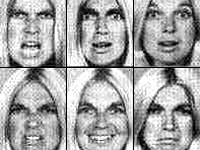
Ques­tion: from left to right, top then down, what uni­ver­sal feel­ing does each face indi­cate?
ÂÂ

Print This Article Print This Article Email This Post Email This Post

Categories: Brain Teasers, Cognitive Neuroscience, Health & Wellness, Professional Development

Tags: , , , , , , , , , , , , ,

12 Responses

  1. Pat says:

    Anger Fear Sur­prise
    Con­tempt Enjoy­ment Sadness

  2. Alvaro says:

    Very good, Pat!

    Anger Fear Sur­prise
    Con­tempt Enjoy­ment Sadness

  3. Chad W Smith says:

    I think the face you are call­ing “Con­tempt” looks more like “Dis­gust” to me. But the mean­ings of those words could be con­sid­ered similar.

    I mean, if I am dis­gusted by some­one or some­thing — then — at that moment — I am view­ing them with contempt.

  4. Mitch says:

    anger, fear, sur­prise
    dis­gust, enjoy­ment, contempt

  5. Alex says:

    fury or anger,

    shocked sur­prise with fear,

    nice sur­prise or pre­tend sur­prise or con­vey­ing inter­est in conversation,

    dis­gust (she seems to be say­ing “ewww!”)

    happy

    sad but only sur­face deep sad.

  6. yahobahne says:

    1. anger or con­tempt
    2. fear
    3. sur­prise
    4. dis­gust
    5. eno­joy­ment and
    6. sadness

  7. Aaron says:

    Anger, fear, suprised, dis­qusted, happy =D, and sad :(

  8. Julie says:

    anger, fear, sur­prise, dis­gust or contempt,enjoyment, sadness

  9. Susie says:

    I read them as anger, fear, sur­prise, dis­gust, enjoyment,and sad­ness.
    I equate the face that I rec­og­nize as dis­guest with a voice say­ing, “Ewwww.”

  10. Carlyn Carter says:

    I thought the METT labeled them hap­pi­ness instead of enjoy­ment and dis­gust instead of contempt…

  11. michelle says:

    1. I am so angry
    2. I am com­pletely mor­ti­fied
    3. I’m pre­tend­ing to lis­ten but really I am not.
    4. I smell some­thing funny
    5. I am so totally like, bored.

Welcome to SharpBrains!

As seen in The New York Times, The Wall Street Jour­nal, CNN and more, Sharp­Brains is an inde­pen­dent mar­ket research and pub­lish­ing firm track­ing brain fit­ness and applied neu­ro­plas­tic­ity research and mar­ket­place. AARP recently named The Sharp­Brains Guide to Brain Fit­ness a Best Book on the subject.

UPCOMING ONLINE COURSE: How to Be Your Own Brain Fit­ness Coach in 2012 (March 2012).

NEWS: How to Sub­mit a Guest Post to SharpBrains.com.

Sponsored Ad

Top 30 Articles

  1. Top 50 Brain Teasers, by Sharp­Brains Team
  2. The Ten Habits of Highly Effec­tive Brains, by Alvaro Fernandez
  3. Why do You Turn Down the Radio When You’re Lost?, by Car­o­line Latham
  4. Brain Plas­tic­ity: How learn­ing changes your brain, by Pas­cale Michelon
  5. Top 10 Brain Fit­ness Future Trends, by Alvaro Fernandez
  6. 7 FAQs on Men­tal Exer­cise, by Alvaro Fernandez
  7. It is Not Only Cars That Deserve Good Main­te­nance: Brain Care 101, by Alvaro Fernandez
  8. Eval­u­a­tion Check­list for Brain Fit­ness prod­ucts and games, by Alvaro Fernandez
  9. MIT Event on Brain Games: Con­text, Trends, Ques­tions, by Alvaro Fernandez
  10. Stress Man­age­ment Work­shop for Inter­na­tional Women’s Day, by Alvaro Fernandez
  11. Mind­ful­ness and Med­i­ta­tion in Schools for Stress Man­age­ment, by Jill Sutie
  12. Stress and Neural Wreck­age: Part of the Brain Plas­tic­ity Puz­zle, by Gre­gory Kellet
  13. How can I improve my short term mem­ory?, by Car­o­line Latham
  14. Cog­ni­tive and Emo­tional Devel­op­ment Through Play, by David Elkind
  15. Judith Beck: Train Your Brain to Think Like a Thin Per­son, by Alvaro Fernandez
  16. Easy Steps to Improve Brain Health, by Car­o­line Latham
  17. Info­graphic: State of the Mar­ket 2009, by Paul Van Slembrouck
  18. Improve Mem­ory with Sleep, Prac­tice, and Test­ing, by Bill Klemm
  19. 10 Brain Tips To Teach and Learn, by Lau­rie Bartels
  20. Dr. Elkhonon Gold­berg on Cog­ni­tive Train­ing and Brain Fit­ness, by Alvaro Fernandez
  21. Max­i­mize the Cog­ni­tive Value of Your Men­tal Work­out, by Schlomo Breznitz
  22. Brain Fit­ness Pro­gram and Neu­ro­plas­tic­ity @ PBS, by Alvaro Fernandez
  23. Mind­ful­ness Med­i­ta­tion for Adults & Teens with ADHD, by David Rabiner
  24. Can Intel­li­gence Be Trained? Mar­tin Buschkuehl shows how, by Alvaro Fernandez
  25. How Strong is the Research Sup­port for Neu­ro­feed­back in Atten­tion Deficits?, by David Rabiner
  26. Exer­cis­ing the body is exer­cis­ing the mind, by Adrian Preda
  27. Brain Evo­lu­tion and Why it is Mean­ing­ful Today to Improve Our Brain Health, by Larry McCleary
  28. Phys­i­cal Exer­cise and Brain Health, by Pas­cale Michelon
  29. Posit Sci­ence, Nin­tendo Brain Age, and Brain Train­ing Top­ics, by Alvaro Fernandez
  30. Sleep, Tetris, Mem­ory and the Brain, by Shan­non Moffet

Sponsored Ads

Enter Your Email and Sub­scribe to our free Monthly eNewslet­ter:
Join more than 40,000 Sub­scribers and stay informed and engaged.

Sponsored Ad

Engage and Discuss via

twitter_logo_header

Monthly Blog Archives