Sharp Brains: Brain Fitness and Cognitive Health News

Use It or Lose It: what is It?

Who has not heard “Use It or Lose It”. Now, what is “It”? And, is “It” only one thing or a number of integrated elements, each of which are heavily involved in specific “brain exercises”, and all of which are important to maintain Brain Fitness.

Let’s review at a glance:

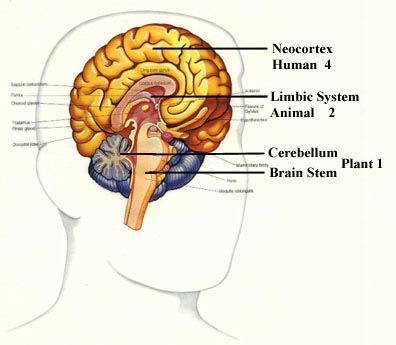
The brain is composed of 3 “brains” or main sub-systems, each named after the evolutionary moment in which the sub-system is believed to have appeared, and after which species we share that structure with.

Theropod A) Neocortex, or Human Brain, is the most recent area, where we perform high-level thinking and complex integrative tasks. Other mammals do have this part too, but in much smaller proportion of the whole brain volume.  

B) Limbic System, or Mammalian Brain, critical for emotions and for memory,


C) Cerebellum and Stem, or Reptilian Brain, that regulates basic vital variables such as breathing, heartbeat and motor coordination (Credit for pic: Arnold Keyserling and R.C.L.)

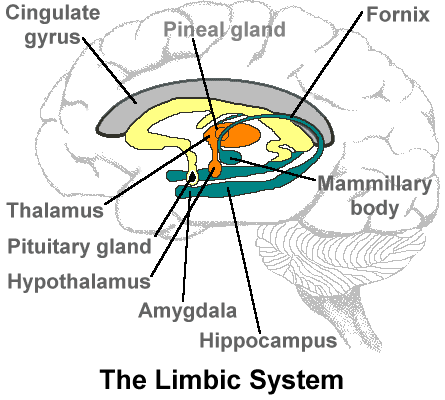
Theropod B) Limbic system: emotions are generated here, as well as the appetites and urges that help us survive. For instance, the amygdala gets triggered to prepare us to deal with a threatening situation, resulting in our feeling of fear. The hippocampus is key in the formation of memory. (Credit: Sandhills College)
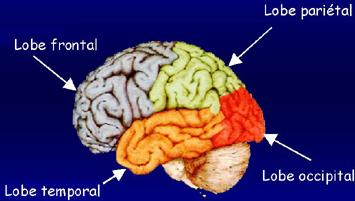
Theropod A) The Neocortex is composed of  

-Frontal Lobes: or the CEO of the Mind, for sophisticated brain functions such as planning and conceptualizing.


-Parietal: deals with movement, the senses, and some forms of recognition

-Temporal: auditory processes and language

-Occipital: visual processing center (credit: Morphonix)

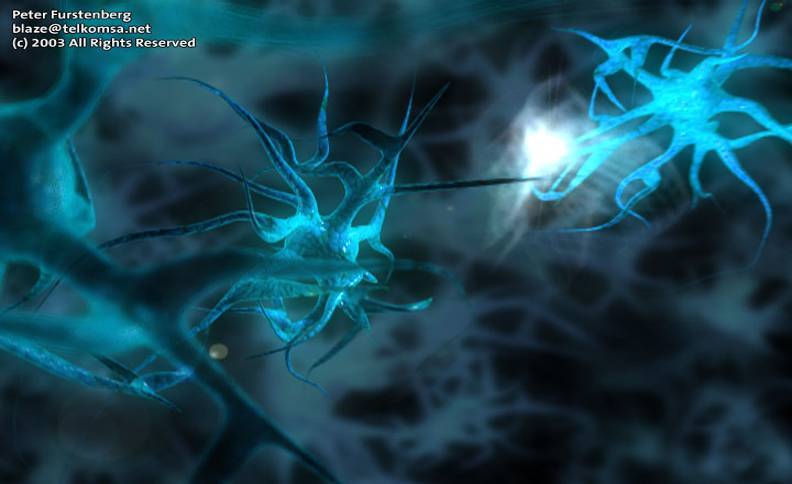
In action When we exercise our brains, we put our Neurons in action. “Cells that fire together wire together”, meaning that synapses, or unions between neurons, get solidified the more often the respective neurons “talk” to each other. (Credit: Peter Furstenberg)

Categories: Cognitive Neuroscience, Education & Lifelong Learning, Health & Wellness, Peak Performance, Uncategorized

Tags: , , , , , , , , , , , , , , , ,

Print This Article Print This Article

26 Responses

  1. Elona says:

    Great post. You have made a very complex topic very accessible. I teach a unit on the teenage brain to my grade nine students in my Learning Strategies Class. I think they will “get it.” more easily after viewing this. I tell them they have to use all parts of their brain all the time, not just the video, tv watching part. So I have them do all kinds of different puzzles to keep their brain “strong”.

  2. Alvaro says:

    Very good take-away. Yes, we need novelty and variety to exercise our brains. I see that once we understand the basics of brain anatomy and functioning, the implcations are clear.

    Good luck, and please let me know how the experiment goes.

  3. [...] Let’s now exercise our Frontal Lobes (that deal with working attention, among other things), and Parietal Lobes (visual interpretation). (Basic brain anatomy) [...]

  4. [...] Here are some of my favorites from his posts so far: 1) The “It” in “Use It or Lose It”: what are the different parts of the brain that people should think about exercising? 2) Physical Fitness and Brain Fitness: this post includes the super-interesting quote: “rats that get regular exercise literally grow bigger brains than sedentary rats.” 3) The Brain and Mind Fitness Revolution is here with us: how do you improve brain fitness and waht in terms of neuromarketing affects decision-making? [...]

  5. [...] Let’s now exercise our Occipital Lobes (visual interpretation and rotation). (Basic brain anatomy here) [...]

  6. [...] These 3 pictures represent a simplified image of brain activity taken from right above our heads, with our Frontal Lobes at the top of each image. Dark color indicates most activity, light color some activity. (Basic brain anatomy here). [...]

  7. [...] Further information on a number of these and other areas covered in the article: – Neuroplasticity and brain exercise – On being “smart” and building neural connections – “Use It or Lose It”: what is “It”? (simplified brain anatomy) – Ready to learn? – Working Memory Training and Attention – On attention, trading psychology and open minds – Emotions and Decision-Making – Brain Fitness Programs and the Brain and Mind Fitness Revolution – Physical fitness and Brain Fitness – On being positive [...]

  8. [...] These 3 pictures represent a simplified image of brain activity taken from right above our heads, with our Frontal Lobes at the top of each image. Dark color indicates most activity, light color some activity. (Basic brain anatomy here).The 3 images show the brain activity happening in 3 different moments in time when one person is doing exactly the same thing. Question: How is that possible? how come we don’t see the activation of the same areas? [...]

  9. [...] Let’s now exercise our Occipital Lobes (visual interpretation and rotation). (Basic brain anatomy here) [...]

  10. [...] Using your brain to solve creative challenges is excellent practice and will help slow down the effects of aging. The limitation with your current brain workout program is that it does not have enough variety or novelty to work out all your mental muscles. Have you ever seen the guys in the gym with the buff upper bodies supported by little chicken legs? The same thing can happen in your brain. Just as you crosstrain in your physical fitness routine (mixing cardio with strength training and flexibility) to get a balanced workout, you need to crosstrain your mental fitness to exercise your brain through motor coordination, emotional understanding, memory, focus and attention, sensory communication, language skills, and mental visualization. [...]

  11. [...] Let’s now exercise our Frontal Lobes (that deal with working attention, among other things), and Parietal Lobes (visual interpretation). (Basic brain anatomy here) [...]

  12. [...] Let’s now exercise our Frontal Lobes (that deal with working memory and attention, among other things), and Parietal Lobes (visual interpretation). (Basic brain anatomy here) [...]

  13. [...] Further Links Mind/Body, Emotions, and Decision-Making Social Intelligence and Mirror Neurons Social Intelligence and the Frontal Lobes An Ape Can Do This. Can We Not? “Use It or Lose It” : What is “It”? The Executive Brain: Frontal Lobes and the Civilized Mind by Dr. Elkhonon Goldberg Brain Exercise at the Osher Lifelong Learning Institute [...]

  14. [...] Links: Executive function Executive Function Disorder Basic Neuroanatomy [...]

  15. [...] Related Links Brain Anatomy Physical Fitness and Brain Fitness Glossary of Brain Fitness Terms [...]

  16. [...] Let’s now exercise our Frontal Lobes (that deal with working memory and attention, among other things), and Parietal Lobes (visual interpretation). (Basic brain anatomy here) [...]

  17. [...] Using your brain to solve creative challenges is excellent practice and will help slow down the effects of aging. The limitation with your current brain workout program is that it does not have enough variety or novelty to work out all your mental muscles. Have you ever seen the guys in the gym with the buff upper bodies supported by little chicken legs? The same thing can happen in your brain. Just as you crosstrain in your physical fitness routine (mixing cardio with strength training and flexibility) to get a balanced workout, you need to crosstrain your mental fitness to exercise your brain through motor coordination, emotional understanding, memory, focus and attention, sensory communication, language skills, and mental visualization. [...]

  18. [...] Further Links Just Forget It! Mind/Body, Emotions, and Decision-Making Social Intelligence and Mirror Neurons Social Intelligence and the Frontal Lobes An Ape Can Do This. Can We Not? “Use It or Lose It” : What is “It”? The Executive Brain: Frontal Lobes and the Civilized Mind by Dr. Elkhonon Goldberg Brain Exercise at the Osher Lifelong Learning Institute [...]

  19. [...] Learn what is the "It" in "Use It or Lose It". A basic understanding will serve you well to appreciate our brain’s beauty as a living and constantly-developing forest of billions of neurons and synapses, full of what Marian Diamond calls the magic trees of the mind. Devote time to practising mentally stimulating habits. [...]

  20. [...] They are: 1. Learn what is the “It” in “Use It or Lose It”. A basic understanding will serve you well to appreciate your brain’s beauty as a living and constantly-developing dense forest with billions of neurons and synapses. [...]

  21. [...] For more context on what those are, here are some quotes from my Interview with Dr. Elkhonon Goldberg: AF: Please tell us more about what the Frontal Lobes are [...]

Top 30 Articles

  1. Top 50 Brain Teasers, by SharpBrains Team
  2. The Ten Habits of Highly Effective Brains, by Alvaro Fernandez
  3. Why do You Turn Down the Radio When You're Lost?, by Caroline Latham
  4. Brain Plasticity: How learning changes your brain, by Pascale Michelon
  5. Top 10 Brain Fitness Future Trends, by Alvaro Fernandez
  6. 7 FAQs on Mental Exercise, by Alvaro Fernandez
  7. It is Not Only Cars That Deserve Good Maintenance: Brain Care 101, by Alvaro Fernandez
  8. Evaluation Checklist for Brain Fitness products and games, by Alvaro Fernandez
  9. MIT Event on Brain Games: Context, Trends, Questions, by Alvaro Fernandez
  10. Stress Management Workshop for International Women's Day, by Alvaro Fernandez
  11. Mindfulness and Meditation in Schools for Stress Management, by Jill Sutie
  12. Stress and Neural Wreckage: Part of the Brain Plasticity Puzzle, by Gregory Kellet
  13. How can I improve my short term memory?, by Caroline Latham
  14. Cognitive and Emotional Development Through Play, by David Elkind
  15. Judith Beck: Train Your Brain to Think Like a Thin Person, by Alvaro Fernandez
  16. Easy Steps to Improve Brain Health, by Caroline Latham
  17. Infographic: State of the Market 2009, by Paul Van Slembrouck
  18. Improve Memory with Sleep, Practice, and Testing, by Bill Klemm
  19. 10 Brain Tips To Teach and Learn, by Laurie Bartels
  20. Dr. Elkhonon Goldberg on Cognitive Training and Brain Fitness, by Alvaro Fernandez
  21. Maximize the Cognitive Value of Your Mental Workout, by Schlomo Breznitz
  22. Brain Fitness Program and Neuroplasticity @ PBS, by Alvaro Fernandez
  23. Mindfulness Meditation for Adults & Teens with ADHD, by David Rabiner
  24. Can Intelligence Be Trained? Martin Buschkuehl shows how, by Alvaro Fernandez
  25. How Strong is the Research Support for Neurofeedback in Attention Deficits?, by David Rabiner
  26. Exercising the body is exercising the mind, by Adrian Preda
  27. Brain Evolution and Why it is Meaningful Today to Improve Our Brain Health, by Larry McCleary
  28. Physical Exercise and Brain Health, by Pascale Michelon
  29. Posit Science, Nintendo Brain Age, and Brain Training Topics, by Alvaro Fernandez
  30. Sleep, Tetris, Memory and the Brain, by Shannon Moffet

Register Today

Events

Monthly Blog Archives