

Neuroplasticity: the potential for lifelong brain development
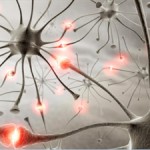 In the past decade there has been a fundamental change in our understanding of human brain capacity. New research has given a renewed, positive view of the human brain and its potential for change and development throughout life.
The human brain is now considered to be a highly dynamic and constantly reorganizing system capable of being shaped and reshaped across an entire lifespan. It is believed that every experience alters the brain’s organization at some level. The key words in this new approach to the brain are neuroplasticity and neurogenesis. Neuroplasticity refers to the lifelong capacity of the brain to change and rewire itself in response to the stimulation of learning and experience. Neurogenesis is the ability to create new neurons and connections between neurons throughout a lifetime. The latter process is also referred to as synaptogenesis. Neuroscientists often tend to distinguish between œneurogenesis and synaptogenesis, but for reasons of simplicity we will refer to both with a combined term neurogenesis. This new paradigm contrasts with traditional ideas of the human brain being a fixed and essentially limited system that only degrades with age.
As we age, the rate of change in the brain, or neuroplasticity, declines but does not come to a halt. In addition, we now know that new neurons can appear in certain parts of the brain up until the day we die.
Brain plasticity is the ability that brain training takes advantages of to try to slow down the aging process. Brain plasticity is also crucial following head injury. It is the one brain’s ability that allows recovery.
Recently, brain changes as a result of cognitive activity have been observed directly in the brain thanks to brain imaging.Evidence of neuroplasticity has been observed mostly in the brains of individuals who became experts in a particular skill. Why? Because changes associated with learning occur massively when we become expert in a specific domain. The areas of the brain that support the skills at which one has become an expert change over time.
.
Evidence of Brain plasticity
An intriguing study showed that London taxi drivers have a larger hippocampus (in the temporal lobe) than London bus drivers (Maguire, Woollett, & Spiers, 2006). This is explained by the fact that the hippocampus is important for forming and accessing complex memories, including spatial memories necessary to navigate efficiently. Taxi drivers have to navigate around London whereas bus drivers follow a limited set of routes. Thus the hippocampus of taxi driver is particularly stimulated and gets to change over time.
Plasticity can also be observed in the brains of bilinguals (Mechelli et al., 2004). It looks like learning a second language is associated with structural changes in the brain: the left inferior parietal cortex is larger in bilingual brains than in monolingual brains.
 Plastic changes also occur in musicians brains compared to non-musicians. Gaser and Schlaug (2003) compared professional musicians (who practice at least 1h per day) to amateur musicians and non-musicians. They found that in several brain areas involved in playing music (motor regions, anterior superior parietal areas and inferior temporal areas) the volume of cortex was highest in professional musicians, intermediate in amateur musicians, and lowest in non-musicians!
A recent study showed that one does not need to become an expert to exhibit signs of neuroplasticity. In 2006, Draganski and his colleagues imaged the brains of German medical students 3 months before their medical exam and right after the exam. They compared the brains of these students to the brains of students who were not studying for exam at this time. Medical students’ brains showed changes in regions of the parietal cortex as well as in the posterior hippocampus. As you can guess, these regions of the brains are known to be involved in memory and learning. This shows one more time that changes in the brain occur following the experience of learning.
.
Q and A about Brain plasticity
Q: Can hormones change my brain?
A: It seems that the brain reacts to its hormonal milieu with structural modifications. Read more: Can the pill change women’s brains.
Q: Can new neurons grow in my brain?
A: Yes in some areas and throughout your lifetime. Learn how and read about what happens to these new neurons here: New neurons: good news, bad news.
Q: Does learning news things change my brain?
A: Yes it does: Learn how by reading how learning changes your brain.
Q: Where can I find more information?
A: Read the answers to 15 common questions about neuroplasticity and brain fitness
———–
This article is adapted from the book The SharpBrains Guide to Brain Fitness by Alvaro Fernandez and Dr. Elkhonon Goldberg, with Dr. Pascale Michelon.