Sharp Brains: Brain Fitness and Cognitive Health News

Neuroplasticity, Brain Fitness and Cognitive Health News

Study: Dyslexia not related to intelligence. Implications for discrepancy model?

NIH-funded study finds dyslexia not tied to IQ (NIH press release):
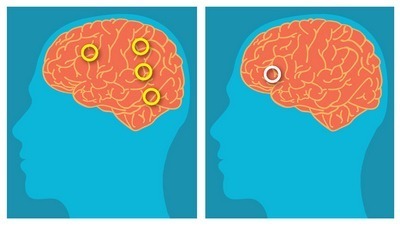
At left, brain areas active in typ­i­cally devel­op­ing read­ers engaged in a rhyming task. Shown at right is the brain area acti­vated in poor read­ers involved in the same task.

- “Regard­less of high or low over­all scores on an IQ test, chil­dren with dyslexia show sim­i­lar pat­terns of brain activ­ity, accord­ing to researchers sup­ported by the National Insti­tutes of Health. The results call into ques­tion the dis­crep­ancy model — the prac­tice of clas­si­fy­ing a child as dyslexic on the basis of a lag between read­ing abil­ity and over­all IQ scores.”

- “In many school sys­tems, the dis­crep­ancy model is the cri­te­rion for deter­min­ing whether a child will be pro­vided with spe­cial­ized read­ing instruc­tion. With the dis­crep­ancy model, chil­dren with dyslexia and lower-than-average IQ scores may not be clas­si­fied as learn­ing dis­abled and so may not be eli­gi­ble for spe­cial edu­ca­tional ser­vices to help them learn to read.”

Study Abstract

Although the role of IQ in devel­op­men­tal dyslexia remains ambigu­ous, the dom­i­nant clin­i­cal and research approaches rely on a def­i­n­i­tion of dyslexia that requires read­ing skill to be sig­nif­i­cantly below the level expected given an individual’s IQ. In the study reported here, we used func­tional MRI (fMRI) to exam­ine whether dif­fer­ences in brain acti­va­tion dur­ing phono­log­i­cal pro­cess­ing that are char­ac­ter­is­tic of dyslexia were sim­i­lar or dis­sim­i­lar in chil­dren with poor read­ing abil­ity who had high IQ scores (dis­crepant read­ers) and in chil­dren with poor read­ing abil­ity who had low IQ scores (nondis­crepant read­ers). In two inde­pen­dent sam­ples includ­ing a total of 131 chil­dren, using uni­vari­ate and mul­ti­vari­ate pat­tern analy­ses, we found that dis­crepant and nondis­crepant poor read­ers exhib­ited sim­i­lar pat­terns of reduced acti­va­tion in brain areas such as left pari­etotem­po­ral and occip­i­totem­po­ral regions. These results con­verge with behav­ioral evi­dence indi­cat­ing that, regard­less of IQ, poor read­ers have sim­i­lar kinds of read­ing dif­fi­cul­ties in rela­tion to phono­log­i­cal pro­cess­ing. Key­words: aca­d­e­mic achieve­ment, apti­tude mea­sures, dyslexia, neu­roimag­ing, reading.

–> To access study: click Here.

Related arti­cles:

Be Socia­ble, Share!

Face­book Responses

Print This Article Print This Article Email This Post Email This Post

Categories: Cognitive Neuroscience, Education & Lifelong Learning, Health & Wellness

Tags: , , , , , , , , , , , , , , , , , , , ,

Welcome to SharpBrains!

As seen in The New York Times, The Wall Street Jour­nal, CNN and more, Sharp­Brains is an inde­pen­dent mar­ket research and inno­va­tion think tank track­ing brain fit­ness and applied neu­ro­plas­tic­ity research and mar­ket­place. AARP recently named The Sharp­Brains Guide to Brain Fit­ness a Best Book on the subject.

Upcoming Event

Sponsored Ad

Top 30 Articles

  1. Top 50 Brain Teasers, by Sharp­Brains Team
  2. The Ten Habits of Highly Effec­tive Brains, by Alvaro Fernandez
  3. Why do You Turn Down the Radio When You’re Lost?, by Car­o­line Latham
  4. Brain Plas­tic­ity: How learn­ing changes your brain, by Pas­cale Michelon
  5. Top 10 Brain Fit­ness Future Trends, by Alvaro Fernandez
  6. 7 FAQs on Men­tal Exer­cise, by Alvaro Fernandez
  7. It is Not Only Cars That Deserve Good Main­te­nance: Brain Care 101, by Alvaro Fernandez
  8. Eval­u­a­tion Check­list for Brain Fit­ness prod­ucts and games, by Alvaro Fernandez
  9. MIT Event on Brain Games: Con­text, Trends, Ques­tions, by Alvaro Fernandez
  10. Stress Man­age­ment Work­shop for Inter­na­tional Women’s Day, by Alvaro Fernandez
  11. Mind­ful­ness and Med­i­ta­tion in Schools for Stress Man­age­ment, by Jill Sutie
  12. Stress and Neural Wreck­age: Part of the Brain Plas­tic­ity Puz­zle, by Gre­gory Kellet
  13. How can I improve my short term mem­ory?, by Car­o­line Latham
  14. Cog­ni­tive and Emo­tional Devel­op­ment Through Play, by David Elkind
  15. Judith Beck: Train Your Brain to Think Like a Thin Per­son, by Alvaro Fernandez
  16. Easy Steps to Improve Brain Health, by Car­o­line Latham
  17. Info­graphic: State of the Mar­ket 2009, by Paul Van Slembrouck
  18. Improve Mem­ory with Sleep, Prac­tice, and Test­ing, by Bill Klemm
  19. 10 Brain Tips To Teach and Learn, by Lau­rie Bartels
  20. Dr. Elkhonon Gold­berg on Cog­ni­tive Train­ing and Brain Fit­ness, by Alvaro Fernandez
  21. Max­i­mize the Cog­ni­tive Value of Your Men­tal Work­out, by Schlomo Breznitz
  22. Brain Fit­ness Pro­gram and Neu­ro­plas­tic­ity @ PBS, by Alvaro Fernandez
  23. Mind­ful­ness Med­i­ta­tion for Adults & Teens with ADHD, by David Rabiner
  24. Can Intel­li­gence Be Trained? Mar­tin Buschkuehl shows how, by Alvaro Fernandez
  25. How Strong is the Research Sup­port for Neu­ro­feed­back in Atten­tion Deficits?, by David Rabiner
  26. Exer­cis­ing the body is exer­cis­ing the mind, by Adrian Preda
  27. Brain Evo­lu­tion and Why it is Mean­ing­ful Today to Improve Our Brain Health, by Larry McCleary
  28. Phys­i­cal Exer­cise and Brain Health, by Pas­cale Michelon
  29. Posit Sci­ence, Nin­tendo Brain Age, and Brain Train­ing Top­ics, by Alvaro Fernandez
  30. Sleep, Tetris, Mem­ory and the Brain, by Shan­non Moffet
Enter Your Email and Sub­scribe to our free Monthly eNewslet­ter:
Join more than 40,000 Sub­scribers and stay informed and engaged.

Monthly Blog Archives