

The Ten Habits of Highly Effective Brains — Time for Brain Fitness Resolutions?
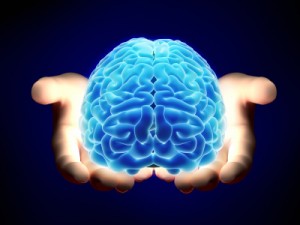 Given many of us are starting to prepare New Year Resolutions, let’s revisit one of SharpBrains’ most popular-ever articles that can help us all refine our Brain Fitness Resolutions…
The Ten Habits of Highly Effective Brains
- Learn what is the “It” in “Use It or Lose It”. A basic understanding will serve you well to appreciate your brain’s beauty as a living and constantly-developing dense forest with billions of neurons and synapses.
- Take care of your nutrition. Did you know that the brain only weighs 2% of body mass but consumes
 over 20% of the oxygen and nutrients we intake? As a general rule, you don’t need expensive ultra-sophisticated nutritional supplements, just make sure you don’t stuff yourself with the “bad stuff”.
 - Remember that the brain is part of the body. Things that exercise your body can also help sharpen your brain: physical exercise enhances neurogenesis.
- Practice positive, future-oriented thoughts until they become your default mindset and you look forward to every new day in a constructive way. Stress and anxiety, no matter whether induced by external events or by your own thoughts, actually kills neurons and prevent the creation of new ones.
 You can think of chronic stress as the opposite of exercise: it prevents the creation of new neurons.
 - Thrive on Learning and Mental Challenges. The point of having a brain is precisely to learn and to adapt to challenging new environments. Once new neurons appear in your brain, where they stay in your brain and how long they survive depends on how you use them. “Use It or Lose It” does not mean “do crossword puzzle number 1,234,567”. It means, “challenge your brain often with fundamentally new activities”.

- We are (as far as we know) the only self-directed organisms in this planet. Aim high. Once you graduate from college, keep learning. The brain keeps developing, no matter your age, and it reflects what you do with it.
- Explore, travel. Adapting to new locations forces you to pay more attention to your environment. Make new decisions, use your brain.
- Don’t Outsource Your Brain. Not to media personalities, not to politicians, not to your smart neighbour… Make your own decisions, and mistakes. And learn from them. That way, you are training your brain, not your neighbour’s.

- Develop and maintain stimulating friendships. We are “social animals”, and need social interaction. Which, by the way, is why ‘Baby Einstein’ has been shown not to be the panacea for children development.
- Laugh. Often. Especially to cognitively complex humor, full of twists and surprises. Better, try to become the next Jon Stewart.


Now, remember that what counts is not reading this article-or any other‑, but practicing a bit every day until small steps snowball into unstoppable, internalized habits…so, pick your next battle and start improving on one of these 10 habits today — why wait till next year? Revisit the habit above that really grabbed your attention, click on the link to learn more, and make a decision to try something different today!
—
Resource: you can learn about the brain, brain fitness, these habits, and much more, reading the book The SharpBrains Guide to Brain Fitness (May 2009; $19.95).
Share this:

2 Comments
About SharpBrains
Top Articles on Brain Health and Neuroplasticity
Top 10 Brain Teasers and Illusions
Got the book?
10 great tips to live by! I especially like the suggestion of not outsourcing your brain. Watching countless people parroting the mindless bigotries and assumptions fed to them by self-serving media talking heads, entertainment figures, and ‘Madison Avenue’ is disturbing. Why be a sheep? Stand up and tell the shepherd to stuff it. Own your own thoughts, emotions, and impulses. Great article!
This is a really interesting article. I have personally experienced the benefit of thinking in a positive manner in every situation. Things only get as bad as we allow them to be and it boosts your energy to go after bigger challenges.