

Our Brain on Music: We need to do more than listen
.What’s The Size Of The Mozart Effect? The Jury Is In.
 In a now well-known 1993 paper in Nature called “Music and spatial task performance”, Frances H. Rauscher and her colleagues report that participants who were exposed to the first movement “allegro con spirito” of the Mozart Sonata KV 448 for Two Pianos in D major scored significantly higher on standardized tests of abstract/spatial reasoning ability than those who were instructed to relax or those who just sat there in silence.
Even though the participants in Rauscher et al.‘s study were college students, and they didn’t administer a full battery of cognitive tests to properly assess general intelligence, their findings translated into “play Mozart to your children and they will grow up smart.” A cottage industry was born.
Don Campbell created an online business selling CDs that purportedly enable the buyer to “discover the transformational powers of music for health, education, and well-being”, claiming that music is a “powerful catalyst for healing, creativity, and development”. He even went further, claiming that “innovative and experimental uses of music and sound can improve listening disorders, dyslexia, attention deficit disorder, autism, and other mental and physical disorders and injuries”.
Others also hopped on The Mozart Effect bandwagon, including the makers of the UK bestseller “Baroque-a-bye Baby” CD, who claim that their “Slow Baroque music — 60 beats per min — same as mothers heartbeat, has a calming effect on babies, while its mathematical perfection and symmetry will stimulate 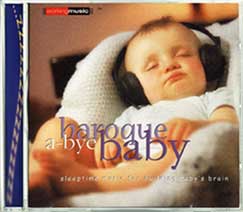 your child’s brain.” Even the governor of Georgia, Zell Miller, announced in 1998 that his state budget would include $105,000 a year to allow every newborn child in Georgia a chance to own and listen to a recording of classical music.
Make no doubt: listening to music, especially music that makes us feel good, does have salutary effects. Research does show that at least up to 10 minutes after the music stops, there is improvement on some tests that are most relevant to music. There is even research showing that listening to music that makes us happy can also make everyone around us look happy.
The questions though are a) whether it’s music that directly makes us smarter, or the positive mood the music puts us in and b) is there something special about listening to classical music over and above listening to Jay‑Z or Rascal Flats that puts us in a better state of mind for working.
Since that original 1993 study, the majority of studies looking at exposure to the Mozart sonata KV 448 showed rather weak enhancement of performance on spatial tasks compared to conditions where participants were exposed to non-musical stimuli or sat in silence for the same amount of time as it took to administer the Mozart sonata (usually 8 minutes, 24 seconds). Research has also suggested that it’s the positive arousal that music affords rather than music in particular that has temporary effects on cognition.
When enough studies on a topic have been done, it’s important to combine all the studies and assess the overall effect, a technique called a “meta-analysis”. Some of the meta-analyses that have been conducted present contradictory results, however.
Chabris (1999) and Hetlan (2000) both conducted a combined analysis of a number of studies but found differing results. Based on published studies, Chabris found an effect size of d=0.14 (very small). They argue that the effects are very specific types of cognitive tasks and are explained neuropsychologically by “enjoyment arousal”.
A limitation of the Chabris study however is that they included in their meta-analysis studies that administered abstract reasoning tests as dependent measure in addition to spatial ability tests. Also, their effect size is based on only 15 study effects, not a particularly large number for a meta-analysis.
Based on unpublished studies (36 study effects), Hetlan (2000) found an effect size of d=0.46 (medium). They only included measures of spatial ability, however. For their effect size estimation, they also included studies in which the musical stimuli that was administered in the treatment conditions were not confined to the Mozart sonata, but instead consisted of any kind of (supposedly enhancing) musical stimulus.
In fact, neither of these meta-analyses included studies that administered the same Mozart sonata as Rauscher et al. did, and more importantly, neither study assessed the potentially confounding influence of publication bias. This is really important since studies that find an effect are more likely to get published whereas those that do not find an effect find tend to end up in the dustbin much faster. This can give a skewed impression of the true effect size.
Enter Jakob Pietshnig and his colleagues. In a recently in press article in the journal Intelligence, Pietshnig et al. present the results of what they claim is the biggest meta-analysis (nearly 40 studies, 104 independent samples, and over 3000 participants) ever conducted on the question of whether or not a Mozart effect exists. They hypothesized that there would be a significant influence of publication bias on the overall effect. What did they find?
1. Samples exposed to the Mozart sonata KV 448 scored significantly higher on spatial tasks than samples exposed to non-musical stimuli or no stimulus at all (d= 0.37, p < .011).
2. Samples exposed to the Mozart sonata KV 448 scored significantly higher on spatial tasks than samples exposed to any other kind of music (d=0.15, p = .02).
As for this small effect size, the researchers note that
“this finding can be explained by potentially differently activating music. Since general arousal affects cortical activation and thus performance on spatial tasks, subjects exposed to more arousing music are more likely to score higher on spatial tasks (Thompson, Schellenberg, & Hussain, 2001). As musical stimuli other than the Mozart sonata covered a wide variety of styles of music from popular music to minimalistic music pieces, less arousing musical stimuli may have played a moderating role in task performance, thus resulting in lower scores in samples exposed to other musical stimuli than in samples exposed to the Mozart sonata.”
3. Samples exposed to any other kind of music scored significantly higher on spatial tasks than samples exposed to non-musical stimuli or not stimulus at all (d=0.38).
4. There was strong evidence of publication bias for studies that compared the Mozart sonata condition to a non-musical or silence condition. In these particular studies, effect sizes for published studies were higher than for unpublished studies “emphasizing that studies showing strong effects in expected directions tend to be published more often, quicker, and more prominently…”
5. Effect sizes of studies that compared exposure to the Mozart sonata to no stimulus at all were three times higher among researchers affiliated with the labs of Rauscher or Rideout than for published studies performed by other labs. The researchers do note that minor procedural differences in studies performed by different labs could be the source of the differences. They point out Rauscher and Shaw (1998), who emphasized the necessity of exact replication of their original study design to observe the Mozart effect. Also, to be fair to Rauscher, she is on record saying that the results of her original study have been “grossly misapplied and over-exaggerated.” Nonetheless, the findings of this large meta-analysis are interesting since they found this difference in effect among labs even after looking at other possible moderating variables relating to task procedure.
The Jury Is In
The researchers conclude:
“This study clearly demonstrates that there is only little support for a specific Mozart effect in published as well as in unpublished work. Although results indicate a positive, significant effect of exposure to the Mozart sonata (KV 448) compared to no stimulus at all on spatial task performance, observed effects were only small in size. Moreover, exposure to other musical stimuli compared to exposure to no stimulus at all yielded a significant overall effect of about the same size…On the whole, there is little left that would support the notion of a specific enhancement of spatial task performance through exposure to the Mozart sonata KV 448.”
I think the jury is in on this one: The Mozart effect is weak, at best. Maybe the question can finally be put to rest.
Does this mean that music is not important? Not at all. People derive great pleasure from listening to music, and the benefits of being in a good mood for performance on any task can be quite beneficial, at least temporarily.
 For more long-lasting effects, however, research shows that learning how to make music is more important for positive long-term changes than just listening to music. Music instruction literally changes the brain, possibly increasing the corpus callosum (the bit of the brain that enables cross-talk between the two hemispheres of the brain). Music instruction may increase working memory, and boost specific skills that are directly related to music such as fine motor skill.
Laurel Trainor, a psychologist at McMaster University and her team of researchers have an ongoing active area of research where they have demonstrated among a number of studies the far-reaching impact of music instruction on the brain and cognition. In a recent study, Lappe, Herholz, Trainor, and Pantev (2008) musically trained two groups of nonmusicians over the course of 2 weeks. People in the sensorimotor-auditory condition learned to play a musical sequence on the piano, whereas the people in the auditory group listened to and made judgements about the music that had been played by participants in the other group. Both groups significantly differed in their cortical responses after training. The sensorimotor-auditory group, however, showed a greater enlargement of the auditory cortex after training compared with the auditory group, indicating that there was greater enhancement of musical representations in the auditory cortex when there is sensorimotor-auditory training compared to mere auditory training. Their results suggest not only that sensorimotor and auditory systems are connected, but also that sensorimotor-auditory training can cause plastic re-organizational changes in the auditory cortex over and above the changes that occur with just auditory training alone.
But that’s just one example of the benefits of musical training. In general, music instruction, as compared to just listening to music may have long lasting effects because the skills that are learned when taking music lessons have real world transfer. According to Trainor, the very nature of learning to play an instrument potentially has many general benefits:
“The child has to hold an instrument, position his hands, listen to the sound the teacher’s making, reproduce that sound, hold in mind the sound and compare it, assess pitch and sound quality, and change that if necessary. All that takes a tremendous amount of attention. It trains kids how to accomplish things, and it trains memory as well. All that is going to make you better at learning.”
The point is this: there is no fast track to smarts. Long-term benefits require long-term training. Listening to music can be beneficial temporarily while you’re working, especially if it makes you feel good and inspires and motivates you to work harder, but be very skeptical of anyone who claims that 8 minutes of anything will have long-lasting effects on intelligence.
I’ll leave the last word to The Journal Times Online:
“If you want music to sharpen your senses, boost your ability to focus and perhaps even improve your memory, the latest word from science is you’ll need more than hype and a loaded iPOD.”
References
- Chabris, C. F. (1999). Prelude or requiem for the ‘Mozart effect’? Nature, 400, 826- 827.
- Hetland, L. (2000). Listening to music enhances spatial-temporal reasoning: Evidence for the Mozart effect. Journal of Aesthetic Education, 34,105–148.
- Lappe, C., Herholz, S.C., Trainor, L.J., & Pantev, C. (2008). Cortical plasticity induced by short-term unimodal and multimodal musical training. The Journal of Neuroscience, 28, 9632–9639.
- Pietschnig, J., Voracek, M., & Formann, A.K. (2010). Mozart effect-Schmozart: A meta-analysis. Intelligence, doi:10.1016/j.intell.2010.03.001.
- Rauscher, F. H., Shaw, G. L., & Ky, K. N. (1993). Music and spatial task performance. Nature, 365, 611.
- Rauscher, F. H., & Shaw, G. L. (1998). Key components of the Mozart effect. Perceptual and Motor Skills, 86, 835?841.
- Thompson, W. F., Schellenberg, E. G., & Husain, G. (2001). Arousal, mood, and the Mozart effect. Psychological Science, 12, 248–251.
 —- Scott Barry Kaufman, Ph.D. is a cognitive psychologist and writer based in New York City. His latest SharpBrains articles are:
Take that Nap! It May Boost Your Learning Capacity Among Other Good Things.
Reflections on Creativity: Interview with Daniel Tammet
Learning About Learning: an Interview with Joshua Waitzkin
Share this:

2 Comments
About SharpBrains
Top Articles on Brain Health and Neuroplasticity
Top 10 Brain Teasers and Illusions
Got the book?
Thankfully someone has put some thought into the Mozart effect. I always doubted that mearly listening to a certain genre of music magically made you more intelligent.
I have been working in the field of practical neurosience for nearly 20 years. I have personally experienced and observed the effect of classical music to enter a “brain state” where you focus, concentrate and have clear thinking with a minimum of emotions. The effect does not last long after the music is discontinued. Some people listen to classical music before having to learn and/perform; the effect is short lived but nevertheless experienced. I prefer to use headphones when creating, writing, studying and memorizing. It really helps. I think it is wonderful and somewhat miraculous that the “Mozart Effect” works at all. I agree that the claims of long term intelligence boost is not supported and it’s a diservice to mislead people and cast a shadow of doubt on the power of music. I would like to see more people experiment with music and decide for themselves what works, for how long and the outcomes. I think people will be pleasantly surprised.It’s safe, it’s fun and it’s quite an adventure.
Stephen Hager