PABI Plan: Reinventing Brain Care Through Policy, Standards, Tech, Neuroinformatics
Today, in honor of both Brain Awareness Week (March 15–21) and Brain Injury Awareness Month (March), it is my pleasure to interview Patrick Donohue, founder of the Sarah Jane Brain Project, a foundation launched in 2007 with the explicit aim to create a model system for children suffering from all Pediatric Acquired Brain Injuries, and an implicit potential, in my view, to fundamentally transform medical research through the use of neuroinformatics and standarized systems of care.
The Foundation: Story and Objectives
Alvaro Fernandez: Patrick, thank you very much for your time today. Can you please provide an overall perspective into what you are doing and why?
Patrick: Of course. The Sarah Jane Brain Project, 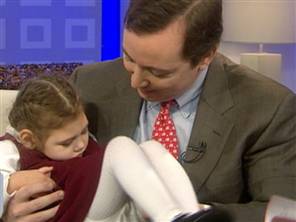 named after my daughter Sarah Jane, started when she was shaken by her baby nurse when she was 5 days of age, which resulted in a severe brain injury. Through my continued efforts to help her, I couldn’t help but notice that the whole field of brain injury needs to make huge progress in a short time frame if it is to really help Sarah Jane — and thousands of children like her — with providing evidence-based, standardized systems of care. Probably 85% of patient needs are common, yet each case seems to require reinventing the wheel. Worse, little research has been done on children’s rehabilitation.
We probably know about 5% of what we will eventually know about the brain. The systems of research and care remind me of the computer science field in the 1950s: very promising, but fractured and inconsistent. In consulting with many experts on ways to accelerate progress, we realized we need to bring both significantly more resources and open source principles to the field of pediatric neurology. We launched the Sarah Jane Brain Project to transform the field to help Sarah Jane and thousands of kids like her.
Before you launched the Foundation, you worked as a lawyer and political consultant. How did that background help, or hinder, those very ambitious goals?
I believe my background was a great help, to bring an outside perspective to the problems that many scientists and doctors were already working on, and to know how to work with politicians and policy-makers to obtain needed attention and resources.
Pediatric Traumatic Brain Injury (PTBI) is the leading cause of death and disability for children and young adults from birth through 25 years of age in the United States, with more new cases in any given year than HIV/AIDS and Autism combined, yet it only receives a paultry portion of federal research money (we are talking a few million for brain injury vs, literally, billions toward other disease states that have less cases), and it was basically ignored during the ongoing health reform process.
Talking to dozens of experts, I met multiple networks and individuals in the TBI care community who had already identified the need to develop a solid pediatric model system, but needed support and resources. We brainstormed potential strategies, and came to see that we would need to cover all Acquired Brain Injury (including both traumatic and not traumatic causes), to increase learning, and to truly be, as I often say, “on the side of the angels” (I have witnessed before how movements fail when they start to become myopic and arbitrary). We also decided to cover birth to 25 years of age, given the slow maturation of the frontal lobes. We wanted to develop best plan possible, irrespective of status quo considerations. For example, we consciously decided not to tailor our plan to the idiosyncratic preferences of different funding sources, but to present the National PABI Plan, a large, and unsolicited, multi-department grant that crossed 7 departments.
Political ears respond to victims’ stories, and to budget-neutral plans. Our concurrent resolution of Congress (H.Con.Res.198) has over 100 co-sponsors in the U.S. House. This measure has the United States Congress endorsing this National PABI Plan as the plan to prevent, identify and treat all brain injuries from birth through 25 years of age while encouraging federal, state and local governments to begin implementing it. We expect it to pass very soon.
Policy Innovation at Federal and State Levels
Please explain the origins and core elements of the PABI Plan (opens 500+ PDF document)
Our National Advisory  Board gathered in New York City for a three-day conference on January 8–10, 2009, to finish drafting the PABI Plan. On January 20, 2009, we sent the first letter to President Barack Obama at 12:01 p.m. introducing the PABI Plan to him.
At its core, the PABI plan wants to fund and implement a new model system, using open source informatics for the first time in medical history, to assist in the study and rehabilitation of children suffering from Pediatric Acquired Brain Injury (PABI). Families will be able to make available, on an anonymous basis, the complete medical and therapy records and information of children suffering from PABI to doctors, researchers, other parents and caregivers, therapists, students and the general public.
Our partners in this are 52 State Lead Centers that will focus on developing evidence-based standarized system of care across 7 categories of care. They will develop research plans, prioritizing key translational points, to help us accumulate the equivalent of 50 years of knowledge in just 5 years. That is our goal.
One important component of the plan was to ensure all this infrastructure became self-sustaining over time. Long term revenue streams will come from: a) a percentage of speed tickets will be devoted to research, and matched by private donors, b) our own Contract Research Organization, that will enable faster research given data available in the database, and c) legal advocacy efforts, that will redirect 25% of the referal fees to provide the resources necessary to subsidize these efforts for those families who need additional support.
Your Foundation and the ACSM announced a new initiative during the Super Bowl. What are the goals of the Zackery Lystedt Brain Project?
Zackery Lystedt sustained a serious brain injury in 2006 playing football, which inspired two years of hard work by his family and colleagues at Brain Injury Association of Washington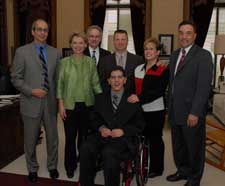 to develop and pass the Zackery Lystedt Law in Washington State and prevent similar cases from happening. This was a brilliant law, the first concussion-specific laws covering all youth sports, and a budget-neutral one since it just requires additional info through existing mechanisms: 1) additional education for coaches to understand risks, 2) immediate removal from play of any athlete suspected of a concussion and 3) proper medical evaluation before a “back-to-play” decision.
Once we saw that law pass unanimously, the American College of Sports Medicine and the Sarah Jane Brain Foundation decided to partner to help other states to replicate that law. We may well get 24 states passing the laws or making serious headway this year.
The Roles of Technology and Philosophy
Technology seems an important enabler both of the PABI Plan ‑to store and mine the database, to develop and measure interventions- and the Zackery Lystedt Law ‑for example, more and more sports teams are using automated cognitive assessments to inform back-to-play decisions. What are your priorities now?
Indeed, technology is a very strong component in all this, to ensure scalability and foster innovation. Our expectation is that some genius student at MIT will find a way to analyze all the medical records, find patterns and predict potential solutions that can help specific patients. Perhaps then he or she will create a start-up, and help build a new eco-system around those new tools.
In terms of automated assessments, we try not to introduce too specific language in the legislation we advocate, to make sure each state retains flexibility. For example, New York State may go further than others in this area.
The PABI Plan includes a strong telehealth module, and a Virtual Center where families can aggregate and share personal health records. This Virtual Center will act as a large and open source Family Registry. Families will be able to opt-in, anonymously, and share a comprehensive set of data points. We plan to launch a Beta version this month, and the full version within a few months.
I would love to hear from anyone in your network with ideas in any of these areas.
We will publish this interview via our blog and upcoming annual report, so hopefully we can build bridges. This whole process to develop standardized systems of care, combining policy with database-driven innovation, could become a blueprint to accelerate progress in many other areas of brain health and performance
Those are your words, but I do believe so. For example, late last year I met a team of neurosurgeons at a Trauma Conference in Santa Barbara, and we discussed how to replicate what we are doing with adults over 25. We should be thinking about the brain through its whole lifetime, including for example Alzheimer’s Disease. We need to break the silos, to aggregate knowledge, to help advance our knowledge of the brain 50 years in 5 years.
My philosophy in all this is that “Things work out best for those who make the best out of the way things work out “. It is unfortunate that I got involved in this because of Sarah Jane’s problem, but I hope our best efforts will help her and many others like her.
Patrick, thank you very much for all your efforts to do so. Please do keep us updated, we want to share with our community when the Virtual Center/ Registry becomes available, and when PABI becomes law.
My pleasure. I will.
—
Links:
- Sarah Jane Brain Project
- PABI Plan
- First letter to President Barack Obama
- Zackery Lystedt Law
- Interview with Lee Woodruff on Bob Woodruff Foundation
- Head games and neuropsych assessments
Share this:

About SharpBrains
Top Articles on Brain Health and Neuroplasticity
Top 10 Brain Teasers and Illusions
Got the book?