

Social Connections for Cognitive Fitness
We human beings are social animals. It seems intuitive (even for introverts!) that social contact has benefits. Obviously we need other people to fulfill basic needs such making sure that our genes outlive. Maybe less obviously we seem to need other people to maintain 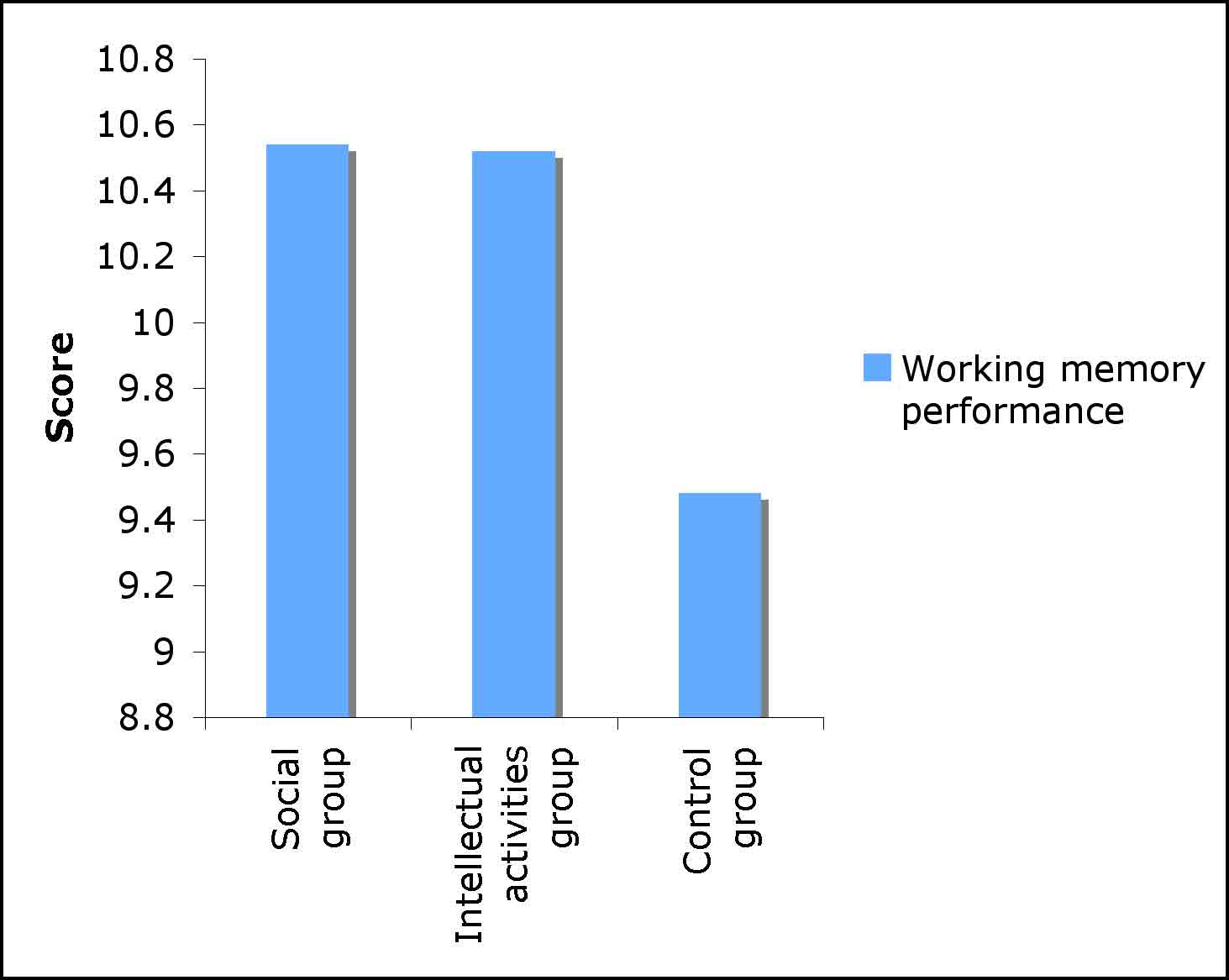 adequate levels of mental well being and motivation.
Even less obviously, social contact may help us improve our brain functions…
Mental fitness seems to depend on a large part on being connected with other people. For instance people with low social support seem to be more prone to mental illness (McGuire & Raleigh, 1986). In 2007, Gladstone and colleagues studied 218 patients with major depression and found out that low social support, especially coming from the family, was associated with chronic depression.
Merely imagining loneliness can negatively affect our behavior…
Baumeister et al. (2005) showed that compared to people who were not told anything, people who were told that they would likely end up alone in life:
- were less able to make themselves consume a healthy but bad-tasting beverage
— quit faster in trying to solve hard and frustrating puzzles.
Telling people that their future would be marred by a tendency to be accident prone (injuries and the like) did not affect their behavior. This shows how much social contact is crucial for human beings!
A new study, published in 2008 by Ybarra and his colleagues went even further by showing that socializing and mental exercises have very similar effects in terms of improving brain functions!
Download paper: Mental Exercising Through Simple Socializing: Social Interaction Promotes General Cognitive Functioning (PDF)
Ybarra hypothesized that social interaction could facilitate cognitive functioning.
First, they collected data from 3600 people aged 24 to 96. They assessed how often these people talked on the phone with friends, neighbors and relatives and how often they got together with the same parties. They also assessed mental functioning of their sample using the mini-mental exam.
Even after controlling for physical health and daily activity levels, they found that the more socially engaged people were, the higher their cognitive performance.
Great news, right? Stay connected and your neurons will stay healthy!
The limitations of this type of study are numerous though. Most of all the result is a CORRELATION. That is, the result shows that people who are socially engaged are also doing well in terms of brain function. This does not mean that being socially engaged results or CAUSES good brain functioning.
This correlation can be interpreted in several ways:
a) being socially engaged results in good brain functioning
b) good brain functioning results in being socially engaged
c) being wealthy (for instance) may result both in being socially engaged and good brain functioning
Fortunately, Ybarra and colleagues were quite aware of the limitations of correlations. They proceeded to conduct another study to show that social interaction indeed CAUSES better cognitive performance.
They randomly assigned participants (aged 18–21) to three groups:
— a social group, in which the participants engaged in a discussion of a social issue for 10mn
— an intellectual activities group, in which the participants solved stimulating tasks (crossword puzzles and the likes) for 10mn
— a control group, in which the participants watched a 10mn clip of Seinfeld
After they participated in the discussion or watched the clip or solved the puzzles, the cognitive functioning of all the participants was assessed. Two tasks were used (for those you are interested: these were a speed of processing task and a working memory task).ÂÂ
Here is what Ybarra et al. found (see the graph)
People in the intellectual activities group did better in the cognitive tasks than people who merely watched a movie.
… this shows one more time that stimulating your neurons is a great way to boost your performance
People who were in the social group did better in the cognitive tasks than people who merely watched a movie.
…. This is the first time that social interaction is shown to directly CAUSE better cognitive functioning. This is a very exciting result. Remember that participants engaged in discussion for only 10m!
The benefit from social interaction was as great as the benefit from intellectual activities.
What we would like to know next would be whether these types of effects are additional!
Why would social interaction boost brain function?
Ybarra and colleagues offer the following reasoning. Social interaction involves many behaviors that require memory, attention and control. These mental processes are also involved in many cognitive tasks. Thus social interaction would act as a prime, it would “oil†these processes so that they are ready to be used when a cognitive task is to be solved.
This is a tentative explanation that may require some refinement but the results are here! Social interaction seems to benefit the brain. Let’s talk then! And limit TV time…
ÂÂ
 — This article was written by Pascale Michelon, Ph. D., for SharpBrains.com. Copyright 2008. Dr. Michelon has a Ph.D. in Cognitive Psychology and has worked as a Research Scientist at Washington University in Saint Louis, in the Psychology Department. She conducted several research projects to understand how the brain makes use of visual information and memorizes facts. She is now an Adjunct Faculty at Washington University, and teaches Memory Workshops in numerous retirement communities in the St Louis area.
Share this:

2 Comments
About SharpBrains
Top Articles on Brain Health and Neuroplasticity
Top 10 Brain Teasers and Illusions
Got the book?
This study fascinates me. The powerful effects of negative words should sober parents who rarely praise their children. Being told “you are stupid” and believing it can be self-fulfilling, just like being told “you will be alone when you are old” and believing it can be self-fulfilling. Here is another thought—will there be research some day that actually measures how much cognitive impairment is the result of watching television?
Very nice, straight up and engaging writing.
Thanks for that.