Sharp Brains: Brain Fitness and Cognitive Health News

Neuroplasticity, Brain Fitness and Cognitive Health News

Stroop Test, Inhibition and Brain-based coaching

Stephanie at Ide­alawg alerts us of a recent arti­cle, titled A Brain-based Approach to Coach­ing, that serves as follow-up to the one we wrote about on the Neu­ro­science of Lead­er­ship”.

The authors, David Rock and Jef­frey Schwartz, are host­ing a a free webi­nar on Thurs­day Novem­ber 2, 2006, from 2 to 3 PM Eastern.

One quote from their arti­cle: “While we don’t seem to have the abil­ity to con­trol our thoughts, we do have a say over which thoughts we act on. It seems we may not have much “free will” but we do have “free won’t”-the abil­ity to not fol­low our urges”.

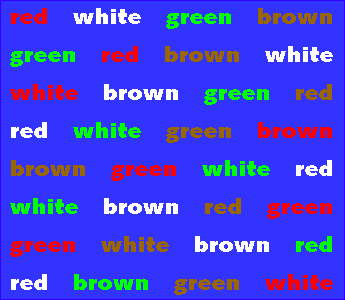
In other words, inhi­bi­tion power is what “frees” us. Many kids and adults with ADHD strug­gle with it-and not only them. You may wonder-what is the deal with Inhi­bi­tion? well, try one of your favorite brain exer­cises, below:

Young-old
Quick! say aloud what color you see in every word, NOT the word you read.

The Stroop test is used in neu­ropsy­cho­log­i­cal eval­u­a­tions to mea­sure men­tal vital­ity and flex­i­bil­ity, since per­form­ing well requires strong inhi­bi­tion capa­bil­ity. Enjoy.

Print This Article Print This Article Email This Post Email This Post

Categories: Attention and ADD/ADHD, Brain Teasers, Education & Lifelong Learning, Health & Wellness, Peak Performance, Professional Development

Tags: , , , , , , , , , , , , , , , , ,

7 Responses

  1. Alan Pritt says:

    A pos­si­ble prob­lem with using the Stroop test as a train­ing method is that after a lit­tle prac­tice it becomes really easy. I sug­gest that this is not because we have learnt to inhibit the nat­ural response, but because we have learnt to make the asso­ci­a­tion between colour and name stronger than word and name (at least in this context).

    An inter­est­ing per­sonal obser­va­tion is that while I quickly became good at the Stoop test, after play­ing with it for an extended period it becomes dif­fi­cult again. I guess this is prob­a­bly some­thing to do with tir­ing out the neu­rons con­nected with the new learnt asso­ci­a­tion. This prob­a­bly tests out my ‘inhi­bi­tion power’ again.

    If incor­po­rated into a dynamic train­ing pro­gram — i.e. the task fre­quently changes so that it is impos­si­ble to learn a task specif­i­cally — then I think this could be a viable train­ing method.

  2. […] And this is the front page.  […]

  3. Alvaro says:

    Alan, thanks for your com­ment. Yes, the Stroop test is an assess­ment, not a train­ing method per se. There are more sys­tem­atic ways to train inhibition.

    Your own expe­ri­ence indi­cates that train­ing is pos­si­ble. Now, no one here is talk­ing about “inhibit­ing nat­ural impulses” but about learn­ing how to man­age them. You do so by wiring new stronger asso­ci­a­tions, and learn­ing when to use them.

    Thanks also for link­ing to us-will pay a visit dur­ing the weekend

  4. Alan Pritt says:

    But it’s dur­ing the process of wiring new asso­ci­a­tions that inhibit­ing becomes very impor­tant. For exam­ple, if you’re learn­ing a song on your gui­tar and you dis­cover you’ve learnt a sec­tion incor­rectly, you have to inhibit what you’ve already learnt while you lay down new path­ways. If you can’t do that, you will con­tinue to make the same mis­takes and strug­gle to get the new asso­ci­a­tions down cor­rectly. Remem­ber­ing to inhibit one’s response seems to be a key part here, which would trans­late to atten­tion when learn­ing a new inhibition.

  5. armand l martin OD says:

    I missed somthing here? or was I just too lit­eral? alm

  6. Alvaro says:

    Armand, have you tried all the words, or only the first few?

  7. Alvaro says:

    Alan, true, you can learn how to inhibit your behavior-playing that gui­tar sec­tion incorrectly-, I just meant that what you can not inhibit is the learned impulse to play it that way at first. You have that impulse, but you man­age your response, and suc­ceed in inhibit the behav­ior (not the impulse). Over time, you will learn new impulses.

Welcome to SharpBrains!

As seen in The New York Times, The Wall Street Jour­nal, CNN and more, Sharp­Brains is an inde­pen­dent mar­ket research and pub­lish­ing firm track­ing brain fit­ness and applied neu­ro­plas­tic­ity research and mar­ket­place. AARP recently named The Sharp­Brains Guide to Brain Fit­ness a Best Book on the subject.

UPCOMING ONLINE COURSE: How to Be Your Own Brain Fit­ness Coach in 2012 (March 2012).

NEWS: How to Sub­mit a Guest Post to SharpBrains.com.

Sponsored Ad

Top 30 Articles

  1. Top 50 Brain Teasers, by Sharp­Brains Team
  2. The Ten Habits of Highly Effec­tive Brains, by Alvaro Fernandez
  3. Why do You Turn Down the Radio When You’re Lost?, by Car­o­line Latham
  4. Brain Plas­tic­ity: How learn­ing changes your brain, by Pas­cale Michelon
  5. Top 10 Brain Fit­ness Future Trends, by Alvaro Fernandez
  6. 7 FAQs on Men­tal Exer­cise, by Alvaro Fernandez
  7. It is Not Only Cars That Deserve Good Main­te­nance: Brain Care 101, by Alvaro Fernandez
  8. Eval­u­a­tion Check­list for Brain Fit­ness prod­ucts and games, by Alvaro Fernandez
  9. MIT Event on Brain Games: Con­text, Trends, Ques­tions, by Alvaro Fernandez
  10. Stress Man­age­ment Work­shop for Inter­na­tional Women’s Day, by Alvaro Fernandez
  11. Mind­ful­ness and Med­i­ta­tion in Schools for Stress Man­age­ment, by Jill Sutie
  12. Stress and Neural Wreck­age: Part of the Brain Plas­tic­ity Puz­zle, by Gre­gory Kellet
  13. How can I improve my short term mem­ory?, by Car­o­line Latham
  14. Cog­ni­tive and Emo­tional Devel­op­ment Through Play, by David Elkind
  15. Judith Beck: Train Your Brain to Think Like a Thin Per­son, by Alvaro Fernandez
  16. Easy Steps to Improve Brain Health, by Car­o­line Latham
  17. Info­graphic: State of the Mar­ket 2009, by Paul Van Slembrouck
  18. Improve Mem­ory with Sleep, Prac­tice, and Test­ing, by Bill Klemm
  19. 10 Brain Tips To Teach and Learn, by Lau­rie Bartels
  20. Dr. Elkhonon Gold­berg on Cog­ni­tive Train­ing and Brain Fit­ness, by Alvaro Fernandez
  21. Max­i­mize the Cog­ni­tive Value of Your Men­tal Work­out, by Schlomo Breznitz
  22. Brain Fit­ness Pro­gram and Neu­ro­plas­tic­ity @ PBS, by Alvaro Fernandez
  23. Mind­ful­ness Med­i­ta­tion for Adults & Teens with ADHD, by David Rabiner
  24. Can Intel­li­gence Be Trained? Mar­tin Buschkuehl shows how, by Alvaro Fernandez
  25. How Strong is the Research Sup­port for Neu­ro­feed­back in Atten­tion Deficits?, by David Rabiner
  26. Exer­cis­ing the body is exer­cis­ing the mind, by Adrian Preda
  27. Brain Evo­lu­tion and Why it is Mean­ing­ful Today to Improve Our Brain Health, by Larry McCleary
  28. Phys­i­cal Exer­cise and Brain Health, by Pas­cale Michelon
  29. Posit Sci­ence, Nin­tendo Brain Age, and Brain Train­ing Top­ics, by Alvaro Fernandez
  30. Sleep, Tetris, Mem­ory and the Brain, by Shan­non Moffet

Sponsored Ads

Enter Your Email and Sub­scribe to our free Monthly eNewslet­ter:
Join more than 40,000 Sub­scribers and stay informed and engaged.

Sponsored Ad

Engage and Discuss via

twitter_logo_header

Monthly Blog Archives